
Puppy First-Year Guide in Elk Grove
A new puppy arrives with more questions than answers, and most of them show up at once. This guide covers the first year the way we see it at Stonelake Animal Hospital on W Taron Court: what to expect month by month, when to call us, and which of the things you are worrying about actually matter in this part of the Central Valley.
- Mon–Fri 8:00 AM – 7:00 PM
- Sat 8:00 AM – 5:00 PM
- Sun closed

Dr. Amoldeep Singh Toor, DVM, founded the practice in 2018 and still practices here. We are open until 7:00 PM on weekdays.
The first twelve months are the busiest stretch of veterinary care a dog will ever have, and almost all of it is scheduled rather than reactive. Vaccines run as a series rather than a single visit, parasite prevention starts before that series finishes, and the socialization window closes at around thirteen weeks whether or not the vaccines have caught up with it. What follows is the whole year in order, with the Elk Grove specifics that change the answers.
A puppy’s first year covers a core vaccine series from six to sixteen weeks, worming from two weeks of age, year-round flea, tick and heartworm prevention, spay or neuter timed to adult size rather than a fixed age, and licensing with the City of Elk Grove by four months. Socialization matters most between three and thirteen weeks, which is before the vaccine series is finished.
Bringing Your Puppy Home
The First Week
Expect some unsettled nights. Keep everything boring and predictable: the same feeding times, the same toilet spot, the same bedtime. Introduce the crate as a good place rather than a punishment, with meals fed inside it and the door open at first. Hold off on visitors for a few days so your puppy can learn the household before meeting everyone who wants to meet them.
Book a first wellness visit within the first week, even if your puppy had vaccines before you collected them. We weigh them, listen to the heart, check the abdomen, eyes and mouth, look for the congenital problems that are easiest to catch early, review the record you brought, and set the schedule for the rest of the year. Call us at (916) 714-3333 to arrange it, and if you are new to us, completing the registration form before you arrive saves time in the waiting room. More on what a first visit covers is on our preventive care page.

Collecting a puppy in summer
If you are collecting your puppy between June and September, plan the drive for early morning or evening. Elk Grove sits above 100 degrees on roughly fourteen days a year and above 90 on about seventy-six, and a parked car is the single most dangerous place a puppy can be in this climate.
Before they arrive
- Set up one small, quiet space with a bed, water and a crate or pen. Puppies settle faster in a contained corner than in a whole house.
- Clear the floor. Cords, shoes, houseplants, children’s toys and anything with a strap or a string all go up out of reach.
- Buy the food your puppy is already eating, even if you intend to change it. Switch gradually across a week so the change does not upset their stomach.
- Ask the breeder, shelter or rescue for the vaccination and worming record, and bring it to the first visit along with the microchip number if there is one.
- Walk your yard before the puppy sees it. Oleander and sago palm are both common in Elk Grove landscaping and both are seriously toxic to dogs, as is foxglove. Check the fence line for gaps at ground level.
- Put the four-month deadline in your calendar now. Elk Grove requires every dog to be licensed by four months of age, and a current rabies vaccination and a microchip are both prerequisites.
At-a-Glance Vaccine Schedule
This is the standard schedule we work to in California for a healthy puppy. Your veterinarian may adjust it for your puppy’s history, breed and household.
Until roughly two weeks after that final puppy booster, your puppy is not fully protected. That timing governs where you can safely take them, which the socialization section below deals with directly.
| Age | Vaccine | Type | Notes |
|---|---|---|---|
| 6 to 8 weeks | DA2PP | Core | Distemper, adenovirus, parvovirus and parainfluenza in one injection. First of the series. |
| 10 to 12 weeks | DA2PP booster | Core | Second of the series. |
| From 12 weeks | Leptospirosis | Core in California practice | Two doses four weeks apart in the first year. Now recommended for every dog rather than only rural ones. |
| 12 to 16 weeks | Rabies | Core, and required by law | California Health and Safety Code Section 121690 requires rabies vaccination for dogs from three months of age. Elk Grove will not issue a license without a current certificate. |
| 14 to 16 weeks | DA2PP booster | Core | Final puppy booster. Protection is not considered reliable until this one is given and has had time to take effect. |
| From 8 weeks, as needed | Bordetella | Lifestyle | For puppies who will board, attend daycare, go to a groomer or join a class. Most facilities ask for it, and so does the district that runs the Elk Grove dog parks. |
| From 8 weeks | Heartworm prevention | Not a vaccine | Started as early as possible and no later than 8 weeks of age. |
| Around 12 months | DA2PP, rabies and leptospirosis boosters | Core | First adult boosters. Rabies then moves to a three-year cycle in Elk Grove, and leptospirosis stays annual. |
Important Note on Lifestyle Vaccines
Core vaccines are recommended for essentially every dog. Lifestyle vaccines depend on what your dog actually does, and in Elk Grove that question has clear answers rather than vague ones. Two of the answers below are us telling you that you probably do not need something.
Leptospirosis
Recommended for every dog, and the advice has genuinely changed. The 2023 ACVIM consensus statement recommends annual vaccination for all dogs from 12 weeks of age regardless of breed, and UC Davis now classes it as a core canine vaccine. The bacteria spread through the urine of rodents, raccoons, skunks and opossums and survive in standing water and damp soil, which describes a Central Valley irrigation ditch, a landscaped drainage swale and a puddle on a walk. It also passes to people.
Bordetella
Recommended if your puppy is going to mix with other dogs. Kennel cough spreads wherever dogs share air. If boarding, daycare, grooming or a training class is in your plans, your puppy needs it. The Cosumnes Community Services District, which runs all five Elk Grove dog parks, requires current vaccinations for every dog using them.
Lyme disease
Usually not recommended here, and this is a real local difference. California is a low-incidence Lyme state and canine seropositivity in Sacramento County has run between 0.29 and 0.31 percent over the last three years. UC Davis does not recommend Lyme vaccination for dogs residing solely in northern California. Consistent year-round tick prevention matters far more here than the vaccine does.
Rattlesnake vaccine
We do not routinely recommend it, and here is the specific reason. The vaccine is a toxoid made from western diamondback venom, but the rattlesnake in Sacramento County is the western rattlesnake, a different species. The 2022 AAHA guidelines state there are no published data documenting efficacy in dogs. What actually helps a bitten dog is getting to a veterinarian immediately.
Canine influenza
Rarely indicated here. California outbreaks have been linked to imported dogs rather than local circulation, and each one burns itself out until another infected dog arrives. Worth a conversation only if your puppy will travel frequently or spend a lot of time in daycare and dog parks.
We go through your puppy’s actual week rather than handing out a standard list. There is no benefit in giving a vaccine your dog has no use for, and we would rather tell you that than sell it to you.
Spay and Neuter
Timing has moved on from a single fixed age. In larger breeds, removing sex hormones before skeletal growth finishes is associated with a higher rate of joint problems, so bigger dogs generally benefit from waiting. Smaller breeds do not carry that risk in the same way.
Surgery here is performed with anesthesia monitoring throughout and pain relief that continues after your dog goes home. Dr. Toor and Dr. Shivinder Singh Saini, DVM, who has an interest in new surgical techniques, will talk you through the timing that suits your individual dog rather than applying one age to every patient. Call (916) 714-3333 to discuss it, or read more about our surgical services.
The legal position
There is no statewide California law requiring you to spay or neuter your dog, despite a 2007 bill that is still quoted online as though it passed. Inside Elk Grove city limits, sterilization becomes mandatory only after a second impound for running at large, and an unaltered dog pays a higher license fee. If you live outside the city limits in an unincorporated community such as Vineyard, Wilton or Florin Town, you are under Sacramento County rules instead, which do impose a general requirement over four months. An Elk Grove mailing address does not settle which set applies to you, so check.
Timing by adult size
| Adult size | Typical timing | Notes |
|---|---|---|
| Small, under 20 lb | Around 6 months | Growth finishes early and waiting brings little benefit. |
| Medium, 20 to 55 lb | 6 to 12 months | Discuss with your veterinarian based on breed, sex and household. |
| Large, 55 to 90 lb | 12 to 18 months | Later timing is associated with a lower rate of joint injury. |
| Giant, over 90 lb | 18 to 24 months | Growth plates close late. Behavior and household circumstances also factor in. |
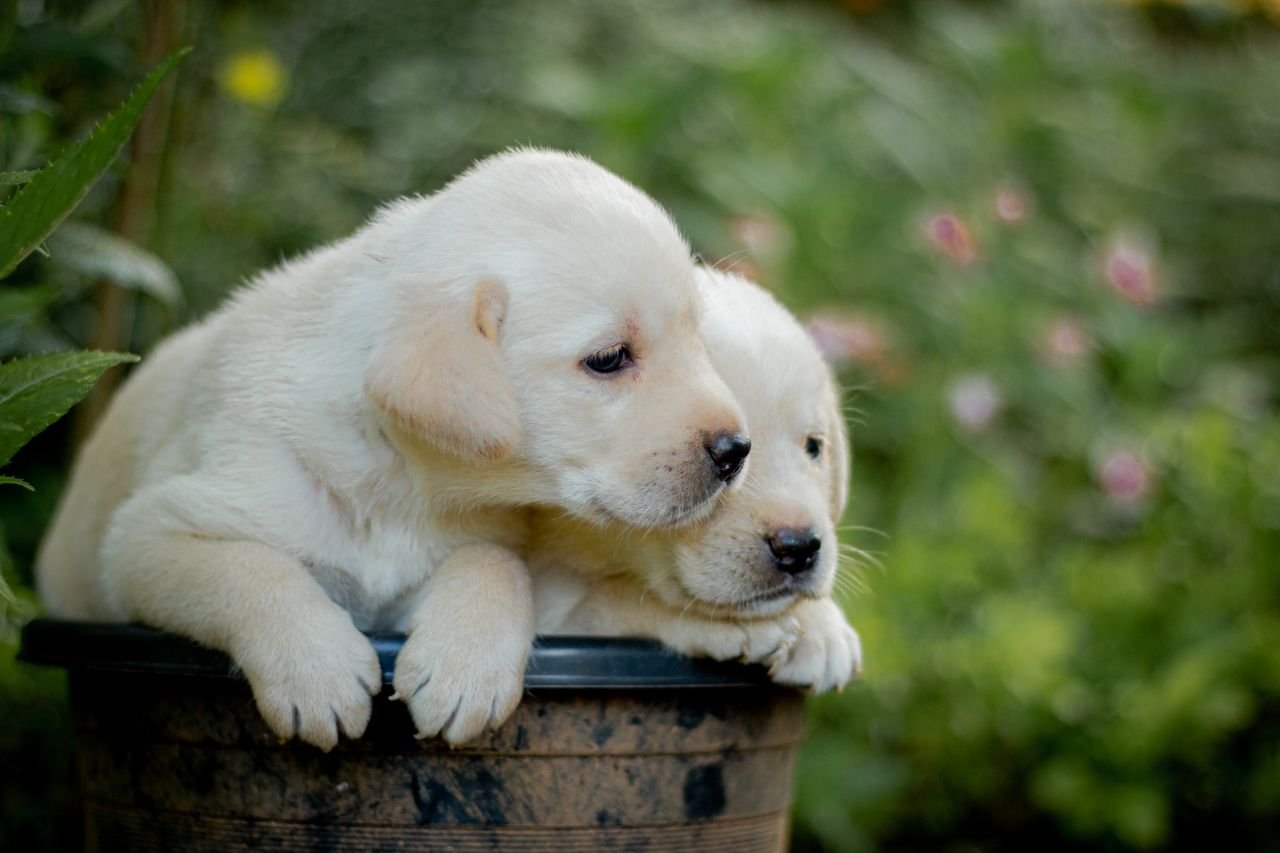
Nutrition for Your Puppy’s First Year
Choose a complete puppy food carrying an AAFCO statement for growth. If your puppy is likely to finish over about 55 pounds, use a food formulated for large breed growth, which controls calcium and energy density so they do not grow too quickly. Growing fast is not the same as growing well.
- 6 to 12 weeks: four meals a day. 3 to 6 months: three meals a day. 6 to 12 months: two meals a day, which most dogs stay on for life.
- Measure portions rather than leaving food down. Weight put on in the first year is difficult to take off later.
- Keep treats under roughly ten percent of daily calories, and use part of the daily ration for training rather than adding to it.
- Fresh water always available, and more of it than you think between June and September.
Some puppies need a therapeutic diet for a specific reason, such as a digestive or urinary condition or a food sensitivity. Those are chosen and monitored by your veterinarian rather than picked off a shelf. If you are unsure what to feed, ask us and we will make a recommendation for your individual dog through nutrition counseling.
Parasites: What to Know
Most puppies arrive carrying intestinal worms. That is normal biology rather than a sign that anyone did anything wrong, because roundworms and hookworms pass from the mother.
Worming
Every two weeks from two to twelve weeks of age, then monthly until six months. We can check a stool sample at routine visits and adjust from there through our in-house laboratory.
Giardia
The one you are most likely to meet. Of Sacramento County dogs tested in 2025, 5.31 percent came back positive, far ahead of roundworm at 0.80 percent and hookworm at 0.32 percent. It causes soft, greasy stool that keeps coming back. Carry water on walks rather than letting your puppy drink from standing water.
Fleas
Year-round prevention. Central Valley winters are mild enough that fleas never properly die back.
Ticks
Four tick species are common in California, including the brown dog tick, which will happily live inside a house or a kennel. Run your hands over your dog after walks in long grass or brush, and check the ears, armpits, groin and between the toes.
Heartworm, described honestly
Heartworm is present in Sacramento County and detected in local dogs every year, at around 0.3 percent of dogs tested. It is not a hotspot: positivity here is roughly six times lower than in Mendocino County. The genuine California hotspots are the north coast ranges and the Sierra foothills, which is exactly where a lot of Elk Grove families take their dogs at weekends. Tell us before you travel there.
Family safety
Some intestinal worms pass to people, particularly young children. Wash hands after handling stool, and pick up in the yard promptly rather than weekly.
House Training
Puppies learn from routine and repetition, not from being corrected after the event. Take your puppy out first thing in the morning, after every meal, after every nap, after play and last thing at night. Go to the same spot, wait, and reward the instant they finish rather than once you are back indoors.
A rough guide to bladder control is one hour per month of age, so a three month old needs a break roughly every three hours. Accidents are part of the process. Clean them with an enzymatic cleaner so the odor does not bring your puppy back to the same patch of carpet, and never punish after the fact, because the puppy cannot connect the two events.
A crate helps because dogs prefer not to soil where they sleep. Size it so your puppy can stand up, turn around and lie down flat, but not so large that one end becomes a toilet.
One Elk Grove specific
In July and August the ground outside can be genuinely too hot for a puppy’s feet in the afternoon, so shift toilet trips to early morning and after sunset during a heat wave, and expect to renegotiate the routine slightly when the weather breaks.
Socialization and Cooperative Care
The primary socialization period runs from roughly three to thirteen weeks and then it closes. What a puppy meets calmly in that period tends to stay unremarkable to them for life, and what they never meet can become frightening later. UC Davis shelter medicine researchers put it bluntly: puppies confined during this window are significantly more likely to develop fear and aggression problems than puppies given a socialization program.
The awkward part
Your puppy is not fully protected during that same window, so socialize carefully rather than not at all. Parvovirus can stay viable in the environment for months to years, which is why shared ground is the risk. Carry your puppy through busy places so they see bicycles, strollers, skateboards, traffic and strangers from a safe height. Invite fully vaccinated adult dogs to your home. Stay out of the Elk Grove dog parks until roughly two weeks after the final booster.
A practical socialization checklist
- Introduce them gently to men, women, children, hats, umbrellas, wheelchairs, traffic noise, the vacuum, the doorbell and the sound of a leaf blower.
- Handle paws, ears and mouth daily so nail trims and examinations are not a fight in a year’s time.
- Practice cooperative care: reward standing still, being lifted, having a collar held and stepping onto a scale.
- Keep sessions short and end them while your puppy is still enjoying themselves. Fear learned in this window is slow to undo.
- Look for a puppy class that requires proof of vaccination before enrollment. That requirement is a good sign rather than an inconvenience.
Children and Other Pets
Most of the work here is done in the first fortnight, and it is mostly about giving everyone in the house a way to leave the room.
Children
Supervise every interaction until you are confident in both parties. Teach children to let the puppy come to them, to skip hugging around the neck, and to leave the puppy alone while they are eating or asleep. Give the puppy a space children may not enter, and hold that line, because a puppy with no escape route learns to growl instead of leaving.
Other dogs
Introduce on neutral ground rather than in the resident dog’s living room where you can. Keep first meetings short and finish them while both dogs are still relaxed. Feed separately, pick up toys and chews at the start, and make sure the older dog has somewhere to retreat to. Most adult dogs correct a puppy appropriately, and that is normal communication rather than aggression. Elk Grove limits a household to four dogs, four cats, or four in combination over four months old.
Cats
Cats need height and an exit route. Put up shelves, use a baby gate the cat can clear but the puppy cannot, and feed the cat somewhere out of reach. Do not let the puppy chase, even in play, because it becomes a habit within days and a frightened cat may stop using the litter box, which turns one problem into two.
Foreign-Body Ingestion Hazards
Puppies swallow things. Some pass, some do not, and an obstruction is a surgical problem that gets worse the longer it waits. If you know or suspect your puppy has swallowed something, call us at (916) 714-3333 rather than waiting to see what happens.
- Common culprits: socks, underwear, corn cobs, stone fruit pits, squeakers, rope toy strands, hair ties, cooked bones and pieces of chewed plastic.
- Signs of a blockage: repeated vomiting, refusing food, a painful or bloated abdomen, straining without producing stool, and a puppy who has gone unusually quiet.
We can assess with radiography and in-house laboratory work the same day during clinic hours and move to surgery from there if that is what the findings call for. See urgent care and diagnostics.
Do not induce vomiting at home
Some objects do more damage coming back up than going down, and some products used for this are unsafe in dogs. Call us first.
The one foreign body that does not get swallowed
Foxtails and other grass awns are the Central Valley’s signature summer problem, and they get in through the nose, ears, eyes, mouth and skin rather than the stomach. They are covered in the Local Health Notes below, because the seasonality here is so specific.
Holiday and Household Hazards
Most poisonings we see involve ordinary household items rather than exotic ones. If you think your puppy has eaten something harmful, call us straight away during clinic hours and bring the packaging if you still have it.
Toxic foods
Chocolate, xylitol in sugar-free gum and some peanut butters, grapes and raisins, onions and garlic, macadamia nuts, alcohol and raw bread dough.
Toxic plants
Two of these are everywhere in Elk Grove. Oleander is one of the most widely planted drought-tolerant shrubs in the Central Valley, and every part of it contains cardiac glycosides. Sago palm is the other: the seeds are the worst part but the entire plant is toxic, it damages the liver, and the ASPCA reports that between 50 and 75 percent of ingestion cases end in death. Also worth knowing: foxglove, azalea and rhododendron, and the green foliage of tomato plants.
Rodent bait
California restricted four second-generation anticoagulant products in 2021, and one consequence has been a measurable rise in bromethalin exposures in California pets. Bromethalin has no specific antidote and the baits are made appealing with peanut butter or sugar. If you suspect your puppy has found a bait station, call us and bring the packaging.
Household products
Human pain relief tablets, antifreeze, snail and slug bait, and cannabis in every form including edibles.
Seasonal
Ribbon, tinsel, glass ornaments, cooked bones from holiday meals, and the string from a turkey, which is one of the most reliable December surgeries in this business. In summer, discarded skewers and corn cobs after a barbecue.
Puppy Dental and Developmental Notes
Puppies have twenty-eight deciduous teeth, usually called baby teeth, which start falling out around four months as forty-two adult teeth come through. Teething runs from roughly three to seven months, and the chewing that comes with it is normal rather than naughty.
- Retained deciduous teeth. If a baby tooth is still sitting beside its adult replacement, most often the canines, it needs to come out. Two teeth in one socket trap food and push the adult tooth out of position.
- Malocclusion. Bites that do not line up can leave a tooth striking the palate or an opposing tooth. Some cases need intervention and others simply need watching.
- Umbilical and inguinal hernias. Many are minor and can be closed at the same time as spay or neuter surgery, which saves a second anesthetic.
- Cryptorchidism. One or both testicles failing to descend. A retained testicle carries a higher cancer risk and is removed rather than left in place.
- Flat-faced breeds. Noisy breathing, snorting, gagging after eating and poor exercise tolerance are worth raising early rather than accepting as normal for the breed. These dogs also cope far worse with Central Valley summers.
We check for all of these at routine puppy visits, which is part of why those early appointments earn their place. Start brushing teeth in the first year while your puppy still thinks a toothbrush is a game — see dental care.
Grooming Basics
Start grooming before your puppy needs it. A puppy who is used to being handled becomes a dog who tolerates a nail trim. A puppy who is not becomes a dog who needs sedation for one.
- Brush short coats weekly, and long or double coats several times a week. Do not shave a double coat for summer: the undercoat insulates against heat as well as cold.
- Trim nails every two to four weeks. If you can hear them clicking on the floor, they are already too long.
- Check ears weekly, especially in floppy-eared breeds and in any dog who swims.
- Introduce toothbrushing early. Daily is ideal and a few times a week still helps.
- From April through fall, check between the toes, inside the ears and around the face after every walk in dry grass. This is the foxtail check and it takes thirty seconds.
Doodles and continuously growing coats
Poodle crosses, doodles and other continuously growing coats usually need professional grooming every six to eight weeks from around four months of age. Book a short, low-pressure first appointment before the coat actually needs work, because the first experience sets the tone for every one after it. Ask us if you would like to talk through what your puppy’s coat type needs before you choose a groomer.
Local Health Notes
A few things matter more for a puppy in Elk Grove than they would somewhere else, and a couple of things you may have read about do not apply here at all.
Licensing is a legal requirement and the deadline is four months
Elk Grove Municipal Code Section 8.03.010 requires every dog and every cat over four months old to be licensed within thirty days, and a current rabies vaccination certificate is a prerequisite. So is a microchip, under Section 8.03.080, unless you pay an annual exemption fee. That microchip requirement is stricter than state law. Licensing is run by Elk Grove Animal Services, a division of the Elk Grove Police Department, and Elk Grove is not served by Sacramento County Animal Care. If your mailing address says Elk Grove but you live in an unincorporated community such as Vineyard, you are under county rules instead, which are different.
Rabies vaccination is not a formality in this county
California law requires it for dogs from three months of age. The reason it matters locally is in the surveillance data: in 2024 Sacramento County reported eighteen rabid animals, the third highest county total in California, made up of eleven skunks, five bats, one fox and one domestic cat. Sacramento accounted for eleven of the nineteen rabid skunks found in the entire state that year. Skunks are ordinary residents of Elk Grove yards. This is not a paperwork exercise.
Foxtails are the Central Valley’s signature summer injury
Foxtails are the spiked seed heads of wild grasses, and they are dangerous once they dry out and harden. UC Davis reports that its own foxtail cases start appearing in April and diminish by fall. The shape is designed to drive a seed into soil, which means that once an awn is in the body it cannot reverse direction and back itself out. Over time an embedded awn migrates through tissue, and UC Davis has documented cases reaching the lungs and other organs. Watch for sudden violent sneezing, head shaking, pawing at an ear or the face, a squinting or weeping eye, and licking or limping on one paw. The only remedy is removal, and the sooner the better.
Heat is the risk most likely to kill a healthy dog here
Elk Grove averages about fourteen days a year at or above 100 degrees and about seventy-six at or above 90, with July daily highs averaging around 93. A parked car is lethal: measured work published in Pediatrics found a mean interior rise of about 3.2 degrees every five minutes, with 80 percent of the total increase happening in the first thirty minutes, and found that cracking the windows an inch and a half made no meaningful difference. California Penal Code Section 597.7 makes it an offense to leave an animal in an unattended vehicle in conditions that endanger it. Walk early or late, test the pavement with the back of your hand before you set out, carry water, and know the signs: heavy panting that does not settle, bright red gums, drooling, wobbliness, vomiting or collapse.
Blue-green algae in local water, including inside Elk Grove
California posts harmful algal bloom advisories at three levels: Caution, Warning and Danger. Here is the part owners miss: the instruction about dogs is identical at all three levels, including the lowest one where people may still swim. Do not let pets go into or drink the water, or eat scum on the shore. Locally, Camden Lake in Elk Grove, about three and a half miles from us, carried a Danger advisory in June 2022 and a Warning that September, and Laguna Creek has carried Caution advisories. Dogs are especially exposed because the bloom material smells interesting to them, they drink while swimming, and they groom whatever gets caught in the coat afterward. Illness can start within minutes.
Rattlesnakes are here, spring through fall
The western rattlesnake is California’s only native venomous snake and the most widespread species in the state. Keep your puppy on a leash of six feet or shorter on trails and in open grass, which is the Elk Grove leash requirement anyway, and stay on the path where you can see the ground. Controlling ground squirrels on your property genuinely helps, because rattlesnakes cannot dig and use rodent burrows. If your dog is bitten, go straight to a veterinarian. Do not apply a tourniquet, do not cut the wound, and do not wait to see how it develops.
The five Elk Grove dog parks, and when your puppy may use them
All five are run by the Cosumnes Community Services District rather than the City: Elk Grove Park on Elk Grove-Florin Road, Laguna Community Park on Bruceville Road, Morse Community Park on Bellaterra Drive, Oasis Park on Poppy Ridge Road, and McConnell Park on Hampton Oak Drive. Morse and Oasis have separate small and large dog areas. Dogs under four months of age are not permitted, which aligns neatly with the end of the puppy vaccine series, and all dogs must have current vaccinations and licenses. Hours run from dawn until about an hour after sunset, and a maximum of three dogs per adult applies. Wait until roughly two weeks after the final booster before your first visit.
Leash rules and the under-four-months rule
Elk Grove Municipal Code Section 8.02.060 defines restraint as a leash no longer than six feet actually held by a person. Section 8.02.100 goes further for young dogs: every dog under four months of age must be confined to the owner’s premises or kept under physical restraint. A second impound for running at large triggers mandatory sterilization at the owner’s cost.
Valley fever is a travel risk, not an Elk Grove one
This one gets misapplied constantly. Coccidioidomycosis is concentrated in the southern Central Valley and the Central Coast, not the Sacramento Valley. Sacramento County recorded 3.4 human cases per 100,000 in 2022 against a state average of 19.1 and a Kern County rate of 264.9. That said, plenty of Elk Grove families drive south on Interstate 5 or Highway 99 with the dog in the car. If you are heading to Bakersfield, Fresno or Visalia, and particularly if your dog will be digging in dry soil there, mention it to us.
Plague is a Sierra travel item, not a valley one
The California Department of Public Health states that plague is absent from the Central Valley. It is present in foothill and mountain areas, and the Tahoe basin in particular. If you take your dog camping up there, keep them away from rodent burrows and dead squirrels. Dogs are far less susceptible than cats.
Coyotes
Sightings are regularly reported by the Elk Grove Police Department, and they increase around the January mating season. Do not leave a small dog unsupervised in the yard, bring pets in at night, keep walks on leash, and secure trash and pet food. A coyote-proof fence needs to be at least five and a half feet with an outward overhang and a buried apron, which most residential fencing is not.
Parvovirus and your yard
If a parvo-positive dog has been in a yard, the virus can persist there for months and common household disinfectants based on quaternary ammonium do not reliably kill it. Bleach does. If you have lost a dog to parvovirus, do not bring an unvaccinated puppy into that space for at least six to twelve months.
A free local resource worth knowing about
Elk Grove Animal Services runs a free quarterly drive-through clinic for Elk Grove residents offering rabies and DHPP vaccination and microchipping, and first-time attendees with an altered animal receive a free one-year license. It does not replace a wellness examination, which is where the developmental checks happen, but it is a genuinely useful thing for residents to know exists.
Low-Stress Veterinary Visits
Before the visit
Bring your puppy hungry so treats actually work, and bring the treats they like rather than the ones we have. Take car trips that do not end at a clinic, so the car does not become a warning sign in itself. Bring the vaccination record, the license details and a stool sample if we have asked for one. In summer, park in the shade and bring your puppy straight in rather than leaving them in the car for even a moment.
In the clinic
Keep your puppy on your lap or on a short leash beside you in reception rather than on the floor greeting every dog who walks in. Stay relaxed yourself, because puppies read their handlers closely. Our team will work at your puppy’s pace and reset if they start to feel overwhelmed. If Spanish is easier for you, tell us when you book and we will make sure someone is available.
Happy visits
Call Stonelake Animal Hospital and ask to bring your puppy in for a happy visit: no examination, no vaccine, just a weigh-in, a fuss from the team and a few treats. Ten minutes now saves a great deal of stress in a year’s time, and we are glad to do it. Call (916) 714-3333 to find a quiet slot.
When to Contact Us
Call us at (916) 714-3333. We are open Monday to Friday 8:00 AM to 7:00 PM and Saturday 8:00 AM to 5:00 PM, closed Sunday. If you are not sure whether something can wait, call during our open hours and describe it rather than deciding on your own. If something happens when we are closed, contact your nearest open emergency veterinary hospital rather than waiting for us to open.
Contact us the same day for
- Repeated vomiting or diarrhea, particularly with blood, or in a puppy who has gone quiet with it
- Refusing food for more than one meal in a young puppy, who has very little reserve
- Difficulty breathing, collapse or a seizure
- Any sign of overheating: heavy panting that does not settle, bright red gums, drooling, wobbliness or vomiting after time outdoors
- A swollen, hard or painful abdomen
- Suspected swallowing of an object, a toxic food, a plant, rodent bait or any household product
- Straining to pass urine or stool without producing anything
- Violent sneezing, head shaking, a squinting eye or sudden limping after a walk in dry grass, which is the foxtail picture
- Any wound, a limp that does not settle, or an eye that is closed, cloudy or weeping
- A suspected snake bite, which needs a veterinarian immediately
Schedule a routine appointment for
- Vaccine boosters and the routine puppy series
- Worming, parasite prevention and heartworm testing
- Spay or neuter planning
- Diet questions, slow weight gain or a puppy gaining too fast
- Teething questions and retained baby teeth
- Behavior and training questions
- Microchipping and license paperwork
- First-year plans that bundle the routine visits into one arrangement
- International health certificates if travel is on the horizon
Pet Insurance
If you are considering pet insurance, buy it before your first appointment rather than after. Insurers exclude pre-existing conditions, and anything written into a record at a visit counts as pre-existing from that day forward. A new puppy is the ideal moment because there is no history yet.
Providers operating in the United States include Trupanion, Healthy Paws, Spot, Fetch, ASPCA Pet Insurance and Figo. This list is educational rather than an endorsement, and we receive nothing for naming any of them. Compare annual limits, deductibles, waiting periods and how each handles hereditary and congenital conditions, which matters more in purebred and flat-faced breeds. Read what each excludes before you read what each covers.
How claims work here
We do not bill insurers directly, so you pay at the time of the visit and your insurer reimburses you afterward on a claim. Plan for that timing rather than being surprised by it. If you have questions about paying for a visit or submitting a claim, ask our team and we will walk you through it.
Common questions
Still unsure what your puppy is due for? Call us on (916) 714-3333 and our team will talk it through.
When does my puppy need their vaccinations in Elk Grove?
Puppies start the DA2PP series between six and eight weeks and continue with boosters every two to four weeks until sixteen weeks of age. Rabies is usually given between twelve and sixteen weeks, and California law requires it from three months. Leptospirosis needs two doses four weeks apart in the first year. Call us at (916) 714-3333 and we will build the schedule around the record your puppy came with, so nothing is repeated unnecessarily. Bring that paperwork to the first visit.
What age should my puppy be spayed or neutered?
It depends on adult size rather than a single age. Small dogs are usually done around six months, while large and giant breeds often benefit from waiting twelve to twenty-four months so the growth plates can close first. Later timing in big dogs is associated with a lower rate of joint problems. There is no California law requiring it, though an unaltered dog pays a higher Elk Grove license fee, and Sacramento County does require it for residents outside the city limits. It is worth a conversation rather than a default.
Does my puppy really need the leptospirosis vaccine?
Yes, and the advice has changed from what many owners were told a few years ago. The 2023 ACVIM consensus statement recommends annual vaccination for all dogs from twelve weeks of age regardless of breed, and UC Davis now classes it as a core canine vaccine rather than a rural one. Rodents, raccoons, skunks and opossums shed the bacteria in urine, and it survives in standing water and damp soil, which is easy to find in a Central Valley neighborhood. It also passes to people, which is another reason we take it seriously.
When can I take my puppy to the Elk Grove dog parks?
Wait until roughly two weeks after the final puppy booster at around sixteen weeks. Parvovirus can persist in soil for months and shared ground is exactly where an unprotected puppy meets it. The local rule points the same way: the district that runs Elk Grove Park, Laguna, Morse, Oasis and McConnell does not allow dogs under four months of age in the dog parks, and requires current vaccinations and a license for every dog using them. In the meantime you can socialize safely by carrying your puppy through busy places and inviting fully vaccinated adult dogs to your home.
My puppy has worms. Did I do something wrong?
No. Most puppies are born with roundworms or pick up hookworms from their mother, so routine worming is standard regardless of how well cared for a puppy is. We worm every two weeks from two to twelve weeks of age, then monthly until six months. The one worth testing for specifically around here is Giardia, which showed up in over five percent of Sacramento County dogs tested last year and is by far the most common intestinal parasite locally. Bring a stool sample to routine visits and we can check it in our own laboratory.
What food should I feed my new puppy?
Choose a complete puppy food carrying an AAFCO statement for growth, and if your puppy is likely to finish over about fifty-five pounds, use one formulated for large breed growth so calcium and energy density are controlled. Feed measured meals rather than leaving food down, and change brands gradually across a week. Keep treats under roughly ten percent of daily calories. If you are unsure, ask us and we will make a recommendation for your individual dog.
What are foxtails and when do I need to worry about them?
Foxtails are the spiked seed heads of wild grasses, and they become dangerous once they dry out and harden. UC Davis sees cases starting in April and easing off by fall, which makes them a genuine Central Valley summer problem rather than a general one. Because the seed is shaped to burrow, an awn that enters the nose, an ear, an eye, the mouth or the skin cannot back itself out and will keep migrating inward. Check your dog after every walk in dry grass and call us at (916) 714-3333 if you see sudden violent sneezing, head shaking, a squinting eye or licking at one paw.
Where to go next
The first year touches most of what we do. These are the pages that pick up where this guide leaves off.
All veterinary services
Preventive care for dogs and cats
Wellness plans for the first year
Spay and neuter surgery
Puppy nutrition counseling
Dental care for dogs and cats
Urgent care for dogs and cats
Kitten first-year guide
Book your puppy’s first visit
Bring the record your puppy came with and we will build the rest of the year around it. Our veterinarians will set the vaccine schedule, start parasite prevention, and check for the developmental things that are easiest to catch early.
Stonelake Animal Hospital
2521 W Taron Ct, Ste 150, Elk Grove, CA 95757
(916) 714-3333
Monday to Friday 8:00 AM to 7:00 PM · Saturday 8:00 AM to 5:00 PM · Sunday closed
This guide is intended for general educational purposes only and does not constitute veterinary medical advice. Always consult a licensed veterinarian for your pet’s individual health needs.