
Dental Care for Dogs and Cats in Elk Grove
Bad breath is rarely just bad breath. Dental care for dogs and cats in Elk Grove starts from that, because by the time an owner notices the smell there is usually something under the gumline that has been going on quietly for a while.
- Mon–Fri 8:00 AM – 7:00 PM
- Sat 8:00 AM – 5:00 PM
- Sun closed
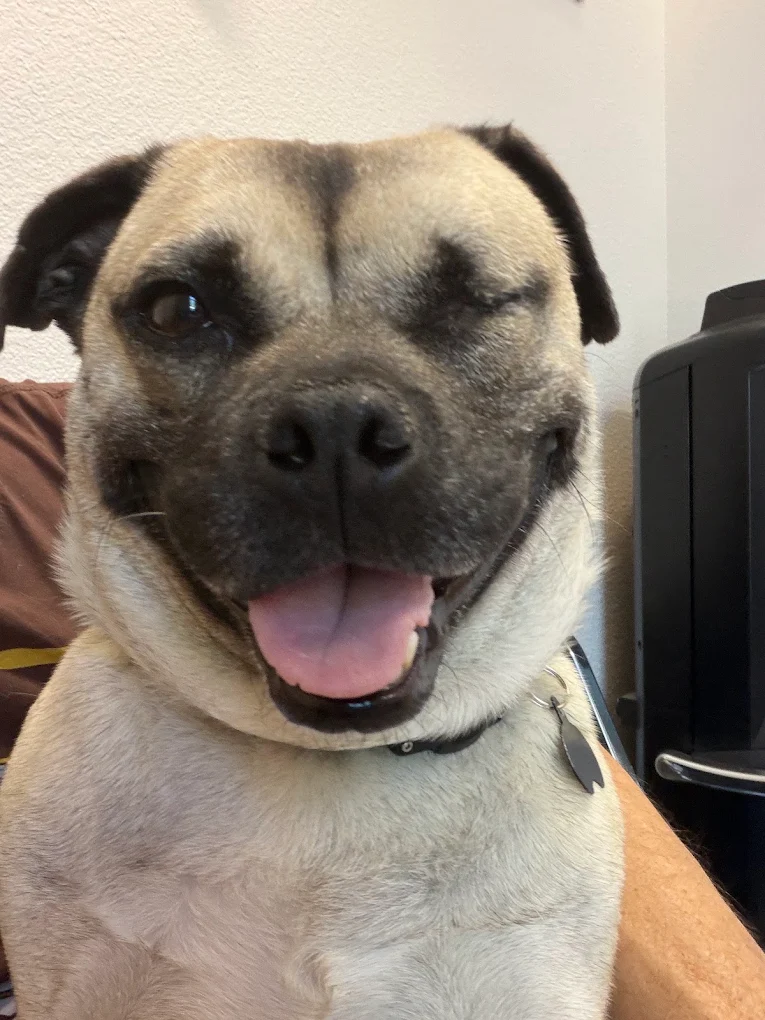
Dental disease is the most common finding we make, and the easiest to act on early.
Dogs and cats do not stop eating when their mouths hurt. They chew on the other side, swallow food whole, or become slightly less interested in things, and most owners only realize how uncomfortable an animal was once the mouth has been sorted out and the old personality comes back.
Veterinary dental care covers the examination, cleaning, and where necessary surgery of a dog or cat’s mouth, carried out under general anesthesia. A visit normally includes a full oral examination, scaling above and below the gumline, polishing, and dental radiographs to show the tooth roots and bone that cannot be seen from the surface.
What a Dental Cleaning Involves
A professional cleaning is more than a scrape and a polish. Every tooth is examined and charted individually, the gum margin around each one is probed for pockets, and plaque and hardened tartar are removed above and below the gumline. Below is the part that matters, because visible tartar on the crown is only the surface of the problem and the disease that loosens teeth is happening out of sight.
The teeth are then polished, which smooths the microscopic scratches left by scaling and slows how quickly plaque takes hold again. Our veterinarians will show you the chart afterwards and go through what was found tooth by tooth rather than telling you it went fine and leaving it there.
At a glance
Veterinary dental care covers the examination, cleaning, and where necessary surgery of a dog or cat’s mouth, carried out under general anesthesia. A visit normally includes a full oral examination, scaling above and below the gumline, polishing, and dental radiographs to show the tooth roots and bone that cannot be seen from the surface.
Dental X-rays and What Sits Below the Gumline
Digital dental radiographs are what separate a thorough dental from a cosmetic one. Roughly speaking, more than half of each tooth is buried in bone, and root abscesses, bone loss, fractured roots, and retained root fragments are all invisible to the naked eye. Cats in particular develop tooth resorption, a painful condition where the tooth structure breaks down from the inside, and it is frequently only picked up on a radiograph.
Taking images means a tooth is only removed when there is a reason to remove it, and equally that a tooth which looks acceptable from above is not left in place when the bone underneath has gone. We take images as part of the assessment rather than as an extra step to be talked into.
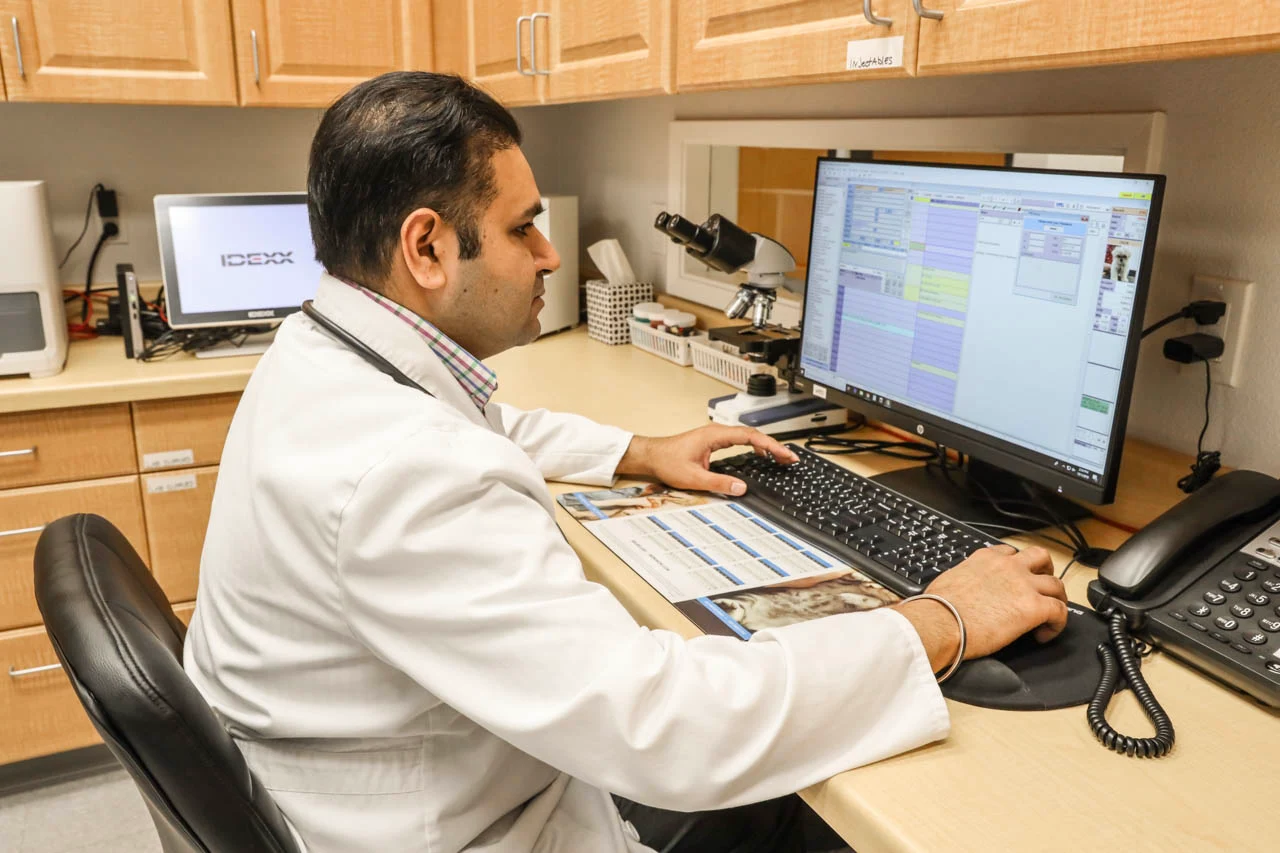
Tooth Extractions and Oral Surgery
Extraction is not a failure of care. It is what a tooth needs when the attachment holding it in has been lost, when a root has fractured, or when resorption has made it painful, and animals are almost always more comfortable afterwards than they were before. Simple extractions are straightforward.
Others need a surgical approach, with a flap raised, the tooth sectioned, and the site closed properly so it heals cleanly. Our veterinarians carry out advanced dental surgery here and will talk through what each tooth needs, and why, before anything is removed. Pain control is planned before the procedure begins rather than added at the end, and most pets are eating normally within a day or two.
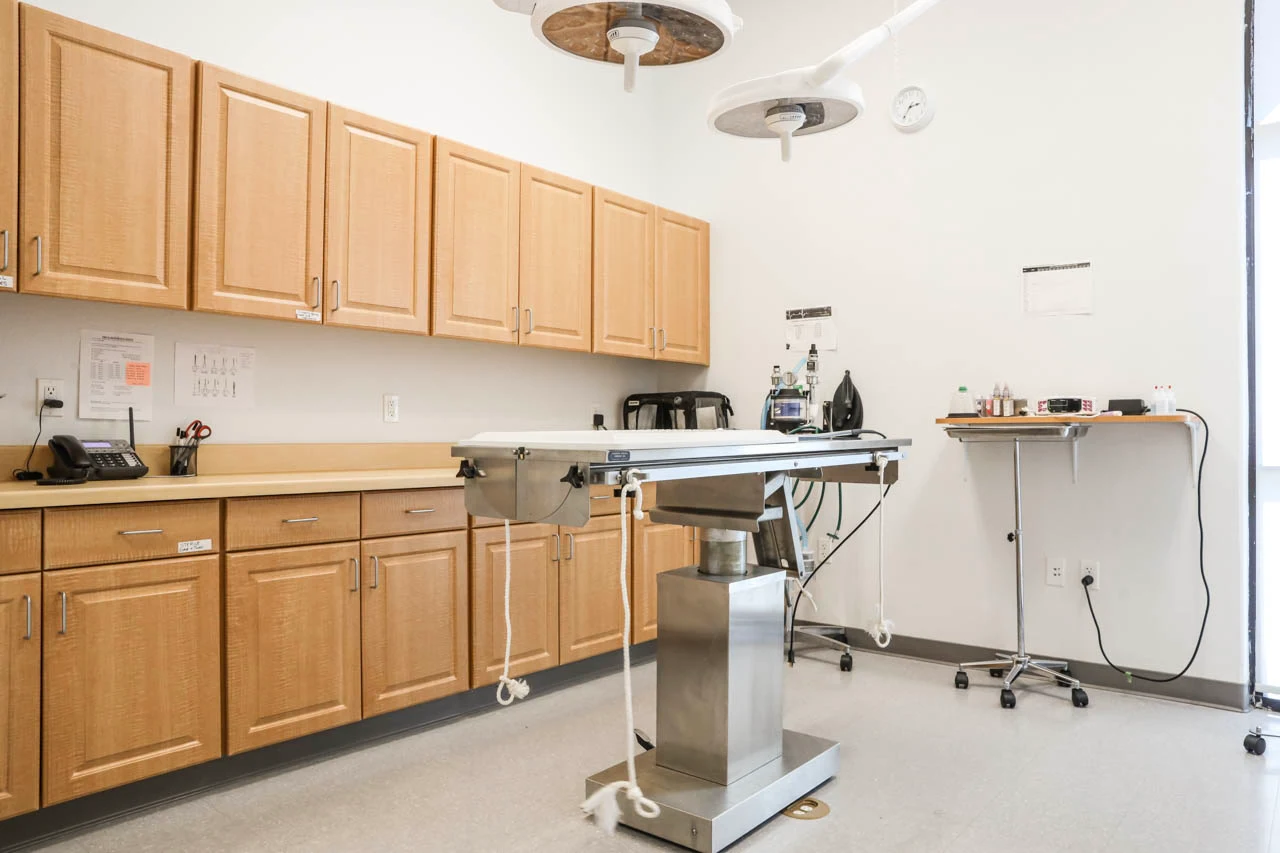
Why Anesthesia Is Necessary
Owners ask about this more than any other part of dentistry, and the honest answer is that a proper dental cannot be done on an awake animal. Cleaning below the gumline, probing each tooth, taking radiographs, and removing a tooth all require an animal to be still and to have a protected airway.
Anesthesia-free scaling only polishes the visible crown, leaves the disease underneath untouched, and gives the mouth a tidy appearance that hides the actual problem. What we do instead is make anesthesia as safe as it can reasonably be: an examination on the day, blood testing discussed beforehand, a plan built around the individual animal, monitoring throughout by a team member, and recovery supervised in the building until your pet is properly awake.
When to Book a Dental Assessment in Elk Grove
Book an oral health assessment if your pet’s breath has changed, if you can see a yellow or brown line where tooth meets gum, if the gums look red or bleed, if a tooth is broken or discolored, if there is drooling or pawing at the mouth, if food is being dropped or chewed on one side, or if a cat has stopped grooming properly.
Small breed dogs, and any dog with a crowded mouth, need looking at earlier and more often, because the teeth sit closer together and disease travels between them faster. Our veterinarians look at the mouth at every routine visit, so the simplest route is to raise it at the next one.
Home Care Between Cleanings
What happens at home decides how long a clean mouth stays clean. Daily brushing with a brush and paste made for pets is the most effective thing you can do, and it works best when it is introduced gradually rather than forced on an animal in one evening. Dental diets, approved chews, and water additives all help, though none replaces brushing.
Ask our team to show you the technique on your own dog or cat rather than reading about it, because the handling is most of the battle and two minutes of demonstration saves weeks of trial and error. Even with good home care, most pets need professional cleanings periodically, and how often depends on the individual mouth.
Common questions
Still not sure what your pet needs? Call us at 916-714-3333 and our front desk will help.
How often does my dog or cat need a dental cleaning?
It depends on the individual mouth. Small breeds and crowded mouths usually need cleanings more often than large breeds. Our veterinarians look at the mouth at every routine visit and will tell you when yours is due rather than putting every pet on the same schedule.
Why does my pet need anesthesia for a dental cleaning?
Because the important work happens below the gumline, and probing, radiographs, and extractions all need a still patient with a protected airway. Anesthesia-free scaling only polishes the visible crown and leaves the disease underneath untouched.
Are dental X-rays really necessary?
More than half of each tooth sits in bone where nothing can be seen from the surface. Radiographs show root abscesses, bone loss, and resorption in cats, which means teeth are removed only when there is a reason and healthy ones are left alone.
Will my pet be able to eat after having teeth removed?
Yes. Most pets eat normally within a day or two and many are more comfortable than they were beforehand, because the teeth that came out were the ones causing pain. You will go home with instructions on soft food and pain control.
My dog's breath is bad but he is eating fine. Is that still a problem?
Usually yes. Dogs and cats rarely stop eating because of mouth pain; they adapt around it. A change in breath is one of the earliest signs owners can detect at home and it is worth an oral health assessment.
Does brushing my pet's teeth actually make a difference?
It is the single most effective thing you can do at home. Daily brushing with a paste made for pets slows how quickly plaque hardens. Ask our team to show you the technique on your own animal, because the handling is most of the difficulty.
Book an appointment
Ask for an oral health assessment at your pet’s next visit, or book one on its own if the breath has already changed. Call Stonelake Animal Hospital in Elk Grove on (916) 714-3333 and our veterinarians will look at the mouth and tell you honestly what it needs.