
Kitten First-Year Guide in Elk Grove
Kittens are less demanding than puppies in some ways and considerably more subtle in others. They hide illness well, they get into things you would not think to worry about, and the decisions you make in the first few months shape how easy the next fifteen years are. This guide covers that first year the way we see it at Stonelake Animal Hospital on W Taron Court.
- Mon–Fri 8:00 AM – 7:00 PM
- Sat 8:00 AM – 5:00 PM
- Sun closed
Dr. Amoldeep Singh Toor, DVM, founded the practice in 2018 and still practices here. We are open until 7:00 PM on weekdays.
Three things in this guide are worth reading before anything else. Elk Grove requires cats to be licensed, microchipped and vaccinated against rabies, including indoor cats, and California state law requires none of it. Lilies cause acute kidney failure in cats and in no other species. And swallowed string is a surgical emergency in a cat rather than something to watch. Everything else here is the ordinary business of a first year, in the order it happens.
A kitten’s first year covers an FVRCP series from six to sixteen weeks, feline leukemia vaccination given after a test, rabies by four months because Elk Grove requires it, worming every two weeks from two to twelve weeks, year-round flea and heartworm prevention, FIV and FeLV testing, and spay or neuter at five to six months.
Bringing Your Kitten Home
The First Week
Expect hiding. A kitten who spends the first two days under the bed is behaving normally, not rejecting you. Sit in the room and read aloud rather than reaching in. Feed on a schedule, keep the litter box spotless, and let them come out on their own timetable.
Book a first wellness visit within 72 hours of bringing your kitten home, even if they came with a vaccination record. We weigh them, check the heart for a murmur, look at the eyes, ears and mouth, check for a hernia or a retained testicle, look for ear mites and fleas, and discuss FIV and FeLV testing. Doing this in the first three days matters more than people expect, because it establishes what normal looks like for your kitten. Call us at (916) 714-3333, and completing the registration form before you arrive saves time. More on what a first visit covers is on our preventive care page.
The carrier goes out on day one
Put the carrier in that room with the door open and a blanket inside, from the first day. This single habit does more for the next fifteen years of veterinary visits than anything else in this guide.
Before they arrive
- Set up one quiet room with a litter box, food and water in separate corners, a bed, a scratching post and a hiding place. A whole house is overwhelming; one room is a good start and you can open it up within days.
- Remove every lily from the house before the kitten arrives. Not to a high shelf. Out of the house. The reason is in the hazards section and it is the most serious thing in this guide.
- Check for gaps behind appliances, open dryers, reclining chairs and unscreened windows. Kittens find all of them.
- Buy the food your kitten is already eating and change gradually across a week if you want to switch.
- Ask the breeder, shelter or rescue for the vaccination and worming record, and whether the kitten has been tested for FIV and FeLV.
At-a-Glance Vaccine Schedule
This is the standard schedule we work to in California for a healthy kitten. Your veterinarian may adjust it for your kitten’s history and household.
Until roughly two weeks after that final kitten booster, your kitten is not fully protected. Keep them indoors and away from unknown cats until then.
| Age | Vaccine | Type | Notes |
|---|---|---|---|
| 6 to 8 weeks | FVRCP | Core | Feline viral rhinotracheitis, calicivirus and panleukopenia in one injection. First of the series. |
| 8 to 9 weeks | FeLV, first dose | Core for all kittens | Feline leukemia virus. Recommended for every kitten regardless of lifestyle, because a kitten’s future is not always the one you planned. Requires a test first. |
| 10 to 12 weeks | FVRCP booster | Core | Second of the series. |
| 12 to 13 weeks | FeLV, second dose | Core for all kittens | Three to four weeks after the first dose. |
| 12 to 16 weeks | Rabies | Core, and required inside Elk Grove | California state law does not require rabies vaccination for cats. Elk Grove Municipal Code does. See the Local Health Notes. |
| 14 to 16 weeks | FVRCP booster | Core | Final kitten booster. |
| Around 12 months | FVRCP and rabies boosters, FeLV if outdoor access | Core | First adult boosters. Rabies then moves to a three-year cycle in Elk Grove. |
Important Note on Lifestyle Vaccines
The main lifestyle question for cats is indoor versus outdoor, and it deserves a more honest answer than it usually gets. We go through your kitten’s actual household rather than handing out a standard list.
FeLV, and why we recommend it for every kitten
Feline leukemia spreads through prolonged close contact, grooming, shared bowls and bite wounds. It is recommended for any kitten with outdoor access, and we recommend it for indoor kittens too during the first year. The reason is practical rather than theoretical: a kitten who is indoor-only at four months is frequently an indoor-outdoor cat at fourteen months, or an escapee, or a household that adds a second cat with an unknown history. In Sacramento County, 1.41 percent of cats tested came back positive in 2025. The vaccine is given after a test, because vaccinating a cat who is already positive achieves nothing.
Rabies, a legal requirement here even though it is not one statewide
This is the one owners are caught out by. California state law mandates rabies vaccination for dogs only, but Elk Grove Municipal Code prohibits keeping any cat over four months old inside city limits without a current rabies vaccination. It is covered fully in the Local Health Notes below.
What cats do not need
There is no leptospirosis vaccine approved for cats, and the canine product is not recommended for them. There is no feline Lyme vaccine, and Lyme risk in Sacramento County is low in any case. If you have a dog as well, the vaccine lists are genuinely different and one does not imply the other.
Spay and Neuter
Standard timing for kittens is five to six months, before the first heat cycle in females. Some shelters and rescues perform early spay and neuter from around eight weeks and two pounds, which is a well-established practice and is not a reason for concern if your kitten arrived already done.
Spaying also substantially reduces mammary cancer risk when done young, and neutering males reduces spraying, roaming and fight injuries, which in turn reduces FIV and FeLV exposure.
Surgery here is performed with anesthesia monitoring throughout and pain relief that continues after your cat goes home. Call (916) 714-3333 to plan the timing, or read more about our surgical services.
Two reasons not to let the timing drift
First, cats are seasonally polyestrous and a female can come into heat as early as four months, so a kitten who is still intact at six months can become pregnant before anyone has registered that she is old enough. A single unspayed pair is where a colony starts.
Second, pyometra, an infection of the uterus, is a life-threatening condition of unspayed females that usually presents in middle age and requires emergency surgery when it does. Spaying removes that risk entirely.
Foods to keep away from cats
Onions, garlic, chives and leeks in any form including powder, which damage red blood cells; grapes and raisins; chocolate; alcohol; raw bread dough; and anything containing xylitol. Cow’s milk is not toxic but most adult cats are lactose intolerant and it causes diarrhea, so it is not the kindness it looks like. Tuna intended for people is fine as an occasional treat and is not a diet.
Nutrition for Your Kitten’s First Year
Cats are obligate carnivores. That is a biological fact rather than a marketing line: they cannot make enough taurine, arachidonic acid, vitamin A or several other nutrients from plant sources, and they must get them from animal tissue. A taurine deficiency causes heart disease and blindness. This is why a cat cannot be fed a dog food or a vegetarian diet.
- Choose a complete kitten food carrying an AAFCO statement for growth. That statement, in small print on the back, is the thing worth reading.
- Under 6 months: three to four meals a day. From 6 to 12 months: two to three meals a day.
- Wet, dry or both. Wet food carries a real advantage in water intake, which matters over a lifetime for a species prone to urinary problems. Many households do wet twice a day with dry in an enrichment toy, and that works well.
- Measure it. Free-feeding dry food from a bowl that is always full is the most common route to an overweight two year old cat.
- Fresh water always available and in more than one place. A wide, shallow bowl away from the food suits most cats better than a narrow deep one.
Some kittens need a therapeutic diet for a specific reason such as a urinary or digestive condition. Those are chosen and monitored by your veterinarian through nutrition counseling.
Parasites: What to Know
Most kittens arrive carrying something. That is normal and is not a reflection on where they came from.
Worming
Every two weeks from two to twelve weeks of age, then monthly until six months. Roundworms pass through the mother’s milk, so a kitten from a well-cared-for queen still needs worming.
Fleas
Year-round prevention. Central Valley winters do not get cold enough to break the cycle. Fleas also carry tapeworm, so a kitten with fleas usually needs both handled. Never use a dog flea product on a cat: some contain permethrin, which is severely toxic to cats and can be fatal.
Ear mites
Very common in kittens from group settings. Dark crumbly debris in the ears and constant scratching or head shaking are the signs. We can confirm it under the microscope in a few minutes rather than guessing — see diagnostics.
Giardia
Common in kittens from shelters, catteries and multi-cat households, and the most frequently detected intestinal parasite in this county across both species. It causes soft, greasy, recurring diarrhea and is worth testing for rather than treating blind.
FIV and FeLV testing
We recommend testing every new kitten, and retesting if the first test was done very young or before a possible exposure. In Sacramento County in 2025, 4.27 percent of cats tested were positive for FIV and 1.41 percent for FeLV. Both change how a cat should be housed and monitored for life, and both are worth knowing about before you introduce a kitten to a resident cat.
Heartworm in cats
Not the same conversation as in dogs. Cats are not the natural host and infections are usually few worms, but a small number of worms in a cat causes disproportionate lung disease and sometimes sudden death. The American Heartworm Society recommends year-round prevention for all cats and notes explicitly that this includes indoor cats, because mosquitoes come indoors. Published work found roughly a quarter of cats diagnosed with adult heartworms were considered indoor cats by their owners.
Litter Box Success
Most kittens arrive already knowing what a litter box is. The problems that come later are almost always about the setup or about health, and rarely about behavior in the way people assume.
- The number rule: one box per cat, plus one. Two cats means three boxes. This is the single most effective thing you can do to prevent problems.
- Put them in different places, not side by side. A row of three boxes in one room is one location as far as the cat is concerned.
- Uncovered, large, and low-sided for a kitten. Covered boxes trap odor for the cat as much as they hide it from you.
- Unscented clumping litter suits most cats. Scented litter is made for the owner and many cats dislike it.
- Scoop daily and change fully at least weekly. Wash with soap and water rather than anything strongly scented.
- Keep boxes away from food, water, noisy appliances and anywhere a dog can corner the cat.
When a litter box problem is a medical problem
A cat who suddenly stops using the box, strains, cries in the box, passes small amounts frequently, or has blood in the urine may have a urinary problem, and in a male cat a urinary blockage is life-threatening within hours. Do not wait to see whether it settles and do not assume it is behavioral. Call us at (916) 714-3333 the same day.
Litter box changes are also an early sign of stress, arthritis in older cats, and gastrointestinal disease. A cat cannot tell you something hurts, so this is often how they do.
Socialization and Cooperative Care
The sensitive period for kittens is earlier and shorter than for puppies, running from roughly two to nine weeks. Much of it has happened before you collect your kitten, which makes the handling you do afterward more important rather than less: what you continue reinforces what was started, and what you neglect fades.
Carrier training from day one
Leave the carrier out permanently with a soft blanket in it. Feed meals inside it. Put treats in it at random so the cat checks it. A carrier that only appears on the day of a veterinary visit becomes a warning sign, and the resulting struggle sets up a bad visit before the cat has even left the house.
A practical handling checklist
- Handle your kitten daily, gently and briefly. Touch the paws, look in the ears, open the mouth, run a hand along the tail and the belly. Reward and stop before they get tired of it.
- Introduce them gently to household noise, visitors, the vacuum, the doorbell and being picked up by more than one person.
- Get them used to a brush, a toothbrush and nail clippers now, in short sessions with treats, long before any of those things are needed.
- Take short car trips that end back at home, so the car is not exclusively associated with the clinic.
Play, Enrichment, and Safety
Cats hunt. Play is that instinct with the ending changed, and a cat who cannot express it becomes a cat who bites ankles at midnight.
Wand toys, and never hands
Wand toys let the cat stalk, chase and pounce at a distance from your hands. Finish every session with a catch, so the sequence completes. Never use hands or feet as toys: a kitten biting fingers is charming, a five-year-old cat doing it is not, and it is very hard to undo.
Unsafe toys
String, yarn, ribbon, tinsel, hair ties, rubber bands and anything with small glued-on parts. The reason string is dangerous enough to have its own section below.
Vertical space
Cat trees, shelves and window perches. Height is where a cat feels safe, and it matters more in a household with dogs or children.
Puzzle feeders
Making a cat work for part of the daily ration addresses boredom and weight at the same time.
Window safety
Screens must be secure. A cat leaning on an unsecured screen from a second-floor window is a fall injury we see, and cats do not reliably land safely from moderate heights.
Catios and harness walking
If you want your cat to have outdoor access, an enclosed catio gives them sun, air and stimulation with none of the traffic, coyote or infectious disease risk. Harness training works with many cats if you start young and go slowly.
Children and Other Pets
Most of the work here is done in the first fortnight, and it is mostly about giving everyone in the house somewhere to go.
Children
Teach children that the cat comes to them, not the other way round. No picking up until they are old enough to do it properly, no following the cat into a hiding place, and no touching while the cat is eating or asleep. Give the cat a high place and a room children may not enter. A cat who can always leave rarely needs to scratch.
Other cats
Go slowly. Faster introductions cause most of the long-term inter-cat problems we see. Start the kitten in a separate room for several days. Swap bedding so each learns the other’s scent before they meet. Feed them on opposite sides of a closed door, then a cracked door, then a baby gate, then supervised time together. Two to four weeks is a normal timeline. Make sure there are enough resources for both, and have FIV and FeLV testing done before any face-to-face contact with a resident cat.
Dogs
The cat needs an exit route and height, and the dog needs to learn that chasing is not an option. Use a baby gate the cat can clear, feed the cat somewhere the dog cannot reach, and keep the litter box behind a barrier, because dogs raid litter boxes and a cat who feels watched there will find somewhere else to go. Elk Grove limits a household to four dogs, four cats, or four in combination over four months old.
Foreign-Body Ingestion Hazards
String is the one to take seriously, and it is genuinely different in cats. If your cat has swallowed thread, yarn, ribbon, tinsel, dental floss or the string from a roast, call us at (916) 714-3333 immediately. Do not wait, and do not wait for symptoms.
Here is why cats are a special case. A cat’s tongue is covered in backward-facing barbs, so once a strand is in the mouth the cat cannot spit it out and swallowing is the only direction available. If one end then lodges, under the tongue or at the stomach outlet, the intestine keeps trying to move the rest along and concertinas itself up along the anchored strand. That is a linear foreign body, and it can saw through the intestinal wall. It is a surgical emergency and outcomes depend heavily on how quickly it is caught.
If you can see thread, do not pull it
Thread visible under the tongue, hanging from the mouth or at the rectum must never be pulled. Pulling can cut through the bowel from the inside. Call us and let us handle it. Do not try to make your cat vomit at home either.
What to watch for, and what else they swallow
- Signs: repeated vomiting, refusing food, lethargy, a painful abdomen, straining without producing stool, and a cat who has become withdrawn.
- Other common culprits: hair ties, rubber bands, foam earplugs, plastic bag corners, needles still attached to thread, and the plastic ring from a milk bottle top.
We can assess with radiography and in-house laboratory work the same day during clinic hours. See urgent care and diagnostics.
Holiday and Household Hazards
Cats meet a different list of hazards from dogs, and a few of them are far more serious in this species than in any other.
Lilies first, because nothing else on this page is as dangerous
True lilies and daylilies cause acute kidney failure in cats, and cats are the only species affected. Dogs eat the same plant and get an upset stomach. Every part is toxic: the petals, the leaves, the stem, the pollen and the water in the vase. A cat who brushes past a bouquet and grooms pollen off their coat has ingested enough. Signs begin within one to three hours and untreated cases progress to kidney failure.
This covers Easter lily, tiger lily, stargazer lily, Asiatic and Oriental lilies, and the orange daylily, which is the one most often missed because it is not a true lily and is planted in half the front yards in the neighborhood. Do not accept cut lilies in your home, and check any bouquet you are given. If your cat has had any contact with one, call us at (916) 714-3333 immediately. Time is the variable that matters most.
Other toxic plants
Oleander, which is planted throughout Elk Grove and is toxic to cats and dogs alike, with cats thought to be more sensitive. Sago palm, which causes liver failure. Also foxglove, azalea and rhododendron, tulip and daffodil bulbs, and the green foliage of tomato plants.
Essential oils
Cats lack an enzyme pathway that most mammals use to process phenols, which makes them unusually vulnerable. Tea tree, wintergreen, pine, citrus, peppermint, eucalyptus, cinnamon and ylang ylang are all associated with poisoning. Active diffusers are the biggest problem, because the oil settles on the coat and the cat grooms it off. Never apply an oil to a cat’s skin and never add one to their water.
Human pills
Human pain relief tablets are severely toxic to cats, and one tablet of the common household kind can be fatal. Never give a cat anything from your own cabinet. Keep pill organizers closed and off counters.
Cleaning products
Concentrated pine and phenol cleaners, and any product left as a wet film on a floor the cat will walk across and then groom off their paws. Rinse and let surfaces dry fully.
Rodent bait
Following California’s 2021 restrictions on second-generation anticoagulant products, bromethalin exposures in California pets have risen, and cats are significantly more vulnerable to it than dogs. There is no specific antidote. Cats can also be poisoned by eating a rodent that ate the bait.
Antifreeze and seasonal hazards
Antifreeze is sweet-tasting and a very small amount causes fatal kidney damage, so clean up garage spills immediately. At holidays, watch for tinsel and ribbon, which combine the string hazard with a shiny lure, glass ornaments, cooked bones, and the bouquet, which brings us back to lilies.
Grooming Basics
Cats groom themselves, which leads people to conclude they need nothing. Long-haired cats in particular need help, and every cat benefits from being handled.
- Short coats: brush weekly. It removes loose hair before the cat swallows it, which reduces hairballs.
- Long and semi-long coats: brush daily, or at least several times a week. Mats form fastest behind the ears, in the armpits, along the belly and around the back end.
- Nails: trim every two to four weeks. Take just the sharp tip and stay well clear of the pink quick. One or two nails per session is a perfectly good result with a kitten.
- Ears: check weekly. Healthy ears need no cleaning. Dark crumbly debris means a check for mites.
- Teeth: start toothbrushing now, with a soft brush and a paste made for cats. Never use human toothpaste. Dental disease is one of the most common problems in adult cats and the habit is far easier to build at four months than at four years.
- Provide scratching posts, both vertical and horizontal, in the places the cat actually spends time. Scratching is a normal need, not a misbehavior.
Toothbrushing in the first year is the cheapest dental work your cat will ever have — more on that on our dental care page.
A mat that has tightened against the skin
A tight mat is painful and cannot be brushed out, and cutting one out at home very often cuts the skin as well, because the skin tents up into the mat. If you have reached that point, let us handle it.
Local Health Notes
Some of these are specific to Elk Grove, and one of them is a legal requirement most cat owners here do not know about.
Elk Grove requires your cat to be licensed, microchipped and vaccinated against rabies, and California does not
This is the surprise. State law mandates rabies vaccination for dogs only. Elk Grove Municipal Code Section 8.04.030 goes further and prohibits keeping any cat or dog over four months old inside city limits without a current rabies vaccination, with primary immunization between four and twelve months, a booster at twelve months, then every three years. Section 8.03.010 requires cats as well as dogs to be licensed within thirty days of reaching four months, and Section 8.03.080 makes a microchip a condition of that license unless you pay an annual exemption fee. Elk Grove Animal Services is explicit that indoor cats are included, on the reasoning that indoor cats do get out and a licensed cat is far likelier to come home. Feral and community cats are exempt. If you live outside the city limits in an unincorporated area such as Vineyard or Wilton, Sacramento County rules apply instead and they are different.
Rabies is genuinely active in this county, and a cat was among the cases
In 2024 Sacramento County reported eighteen rabid animals, the third highest total in California, including eleven skunks, five bats, one fox and one domestic cat. That domestic cat was the only rabid cat reported anywhere in the state that year. Skunks and bats are ordinary residents of Elk Grove neighborhoods, and a cat who goes outside, or who catches a bat that got into the house, is the most likely animal in your household to meet one.
Coyotes and outdoor cats
The Elk Grove Police Department reports sighting clusters and notes activity rises around the January mating season. California Fish and Wildlife guidance is direct: do not leave small pets unsupervised outside and bring them in at night. An outdoor cat in Elk Grove faces coyotes, traffic, other cats and the infectious diseases that come with fighting. A secure catio gives most of the benefit with none of that.
Heat
Elk Grove averages roughly fourteen days a year at or above 100 degrees. Cats hide heat stress well. Make sure there is always shade and water, that a cat cannot be shut into a garage, shed or greenhouse by accident, and never leave a cat in a parked car, which California Penal Code Section 597.7 also makes an offense. Signs of overheating in a cat are panting, which is never normal, along with drooling, restlessness, bright red gums and lethargy.
Lilies and Central Valley landscaping
Covered above, and repeated here because it is the highest-consequence local item for a cat. Daylilies in particular are a standard front-yard plant in Elk Grove and are just as dangerous to cats as true lilies. Oleander and sago palm are equally common in local yards and both are toxic.
Foxtails
Less common in cats than in dogs but not rare, particularly in cats with outdoor access. UC Davis sees cases from April through fall. Watch for sudden violent sneezing, head shaking, pawing at an ear or a squinting eye.
Blue-green algae
Less of a cat problem than a dog one, but worth knowing if your cat has access to standing water. Camden Lake in Elk Grove, about three and a half miles from us, carried a Danger advisory in June 2022 and a Warning that September. California’s advisory signage tells owners to keep pets out of the water at every advisory level, including the lowest.
Plague is a mountain travel item, and cats are the species at risk
The California Department of Public Health states that plague is absent from the Central Valley, so it is not an Elk Grove hazard. It is present in the foothills and the Sierra, and the important part is this: in contrast to dogs, domestic cats are highly susceptible, usually infected by hunting rodents, and untreated plague in cats is often fatal. Exposure to infected cats has been linked to human cases in California. If you take a cat to a cabin in the Sierra or the Tahoe basin, keep them indoors and away from rodents, and tell your veterinarian about the trip if the cat becomes unwell with a fever and swollen glands afterward.
Panleukopenia and the dog next door
Some strains of canine parvovirus currently circulating in the United States can infect cats and cause severe disease. The FVRCP vaccine cross-protects, which is one more reason not to let the kitten series lapse. Parvovirus also survives in the environment for months, so a yard where an infected dog has been is not safe ground for an unvaccinated kitten.
A free local resource worth knowing about
Elk Grove Animal Services runs a free quarterly drive-through clinic for Elk Grove residents offering rabies and FVRCP vaccination and microchipping, with a free one-year license for altered animals for first-time attendees. It does not replace a wellness examination, but for meeting the city’s licensing and rabies requirements it is genuinely useful.
Low-Stress Veterinary Visits
Carrier training
This is the whole game, and it costs nothing. Leave the carrier out permanently as a piece of furniture, with a soft blanket inside. Feed meals in it. Drop treats in it when the cat is not looking. Within a few weeks most cats sleep in it voluntarily, and the day of a visit stops beginning with a chase. Choose a hard-sided carrier whose top half unclips, because it lets us examine a nervous cat in the bottom half of their own carrier instead of dragging them out of it.
Before the visit
Bring your kitten hungry so treats work. Spray a synthetic feline pheromone product on the blanket half an hour before you leave if your cat is anxious. Cover the carrier with a towel for the journey and secure it with a seat belt. In summer, keep the car cool before the cat goes in and never leave the carrier in a parked car for any length of time.
In the clinic
Keep the carrier off the floor and covered while you wait, and away from any dog in reception. Let us open the carrier rather than tipping the cat out. Our team will work at your cat’s pace, and if a cat needs a few minutes to come out on their own terms, that is time well spent. If Spanish is easier for you, tell us when you book and we will make sure someone is available.
Happy visits
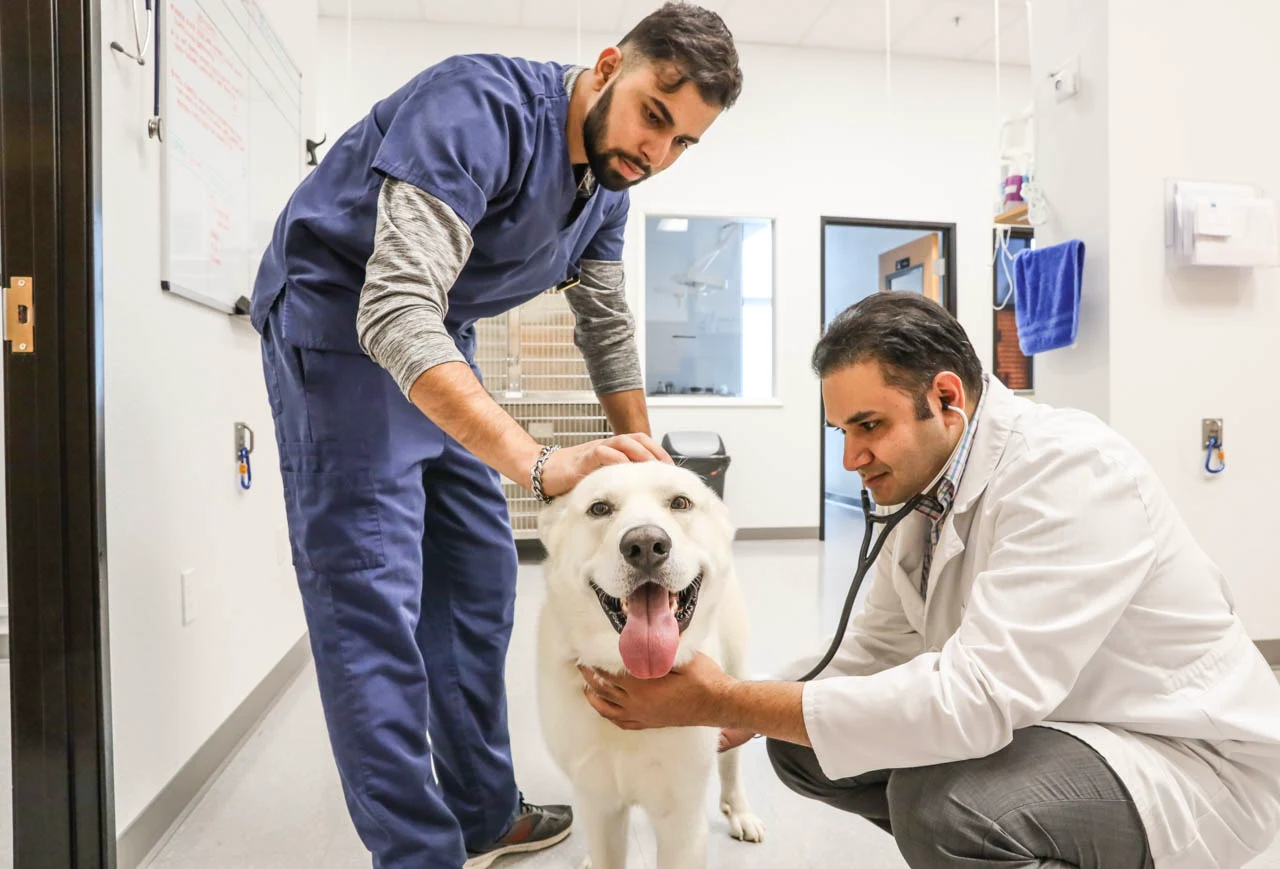
Call Stonelake Animal Hospital and ask to bring your kitten in for a happy visit: no examination, no vaccine, just a weigh-in and a few treats. It is a short appointment and it changes how the next fifteen years of visits go. Call (916) 714-3333 to find a quiet slot.
When to Contact Us
Call us at (916) 714-3333. We are open Monday to Friday 8:00 AM to 7:00 PM and Saturday 8:00 AM to 5:00 PM, closed Sunday. Cats conceal illness, so a change in routine is worth a call even when nothing looks dramatic. If something happens when we are closed, contact your nearest open emergency veterinary hospital rather than waiting for us to open.
Contact us the same day for
- Any straining in the litter box, crying in the box, frequent small amounts of urine, or blood in the urine. In a male cat this can be a urinary blockage and it is life-threatening within hours
- Any contact at all with a lily, including chewing a leaf, drinking vase water or grooming pollen from the coat
- Swallowed string, thread, ribbon, tinsel or dental floss, or thread visible under the tongue or at the rectum, which must never be pulled
- Repeated vomiting, refusing food for more than a day, or a kitten who has become withdrawn
- Difficulty breathing, open-mouth breathing, panting, collapse or a seizure
- Sudden inability to use the back legs, which in cats is an emergency
- A wound or an abscess, particularly after a fight with another cat
- Suspected contact with a bat, a skunk or any wild animal
- Suspected ingestion of a human pill, rodent bait, antifreeze or an essential oil, or oil spilled on the coat
- An eye that is closed, cloudy or weeping, or violent sneezing after time outdoors
Schedule a routine appointment for
- Vaccine boosters and the routine kitten series
- FIV and FeLV testing, worming and parasite prevention
- Spay or neuter planning
- Microchipping and Elk Grove license paperwork
- Diet questions and weight checks
- Toothbrushing advice and dental checks
- Litter box questions that are not urgent, mats, or nail trims
- First-year plans that bundle the routine visits into one arrangement
- Health certificates if travel is on the horizon
Pet Insurance
If you are considering pet insurance, buy it before your first appointment rather than after. Insurers exclude pre-existing conditions, and anything written into a record at a visit counts as pre-existing from that day forward. A new kitten is the ideal moment because there is no history yet.
Providers operating in the United States include Trupanion, Healthy Paws, Spot, Fetch, ASPCA Pet Insurance and Figo. This list is educational rather than an endorsement, and we receive nothing for naming any of them. Compare annual limits, deductibles, waiting periods and how each handles hereditary conditions and dental care. Read what each excludes before you read what each covers.
Two things to check for a cat specifically
Check how each policy treats urinary conditions and chronic kidney disease, which are the two things most likely to matter over a cat’s life.
On claims: we do not bill insurers directly, so you pay at the time of the visit and your insurer reimburses you afterward. Plan for that timing rather than being surprised by it, and ask our team if you have questions about submitting a claim.
Common questions
Still unsure what your kitten is due for? Call us on (916) 714-3333 and our team will talk it through.
When does my kitten need their vaccinations in Elk Grove?
Kittens start the FVRCP series between six and eight weeks and continue with boosters every three to four weeks until sixteen weeks of age. Feline leukemia needs two doses three to four weeks apart, after a test. Rabies is usually given between twelve and sixteen weeks, and inside Elk Grove city limits it is a legal requirement for cats even though California state law does not require it. Call us at (916) 714-3333 and we will build the schedule around the record your kitten came with.
Does my indoor cat in Elk Grove really need a rabies shot and a license?
Yes, on both counts, and this catches almost everyone out. California state law requires rabies vaccination for dogs but not cats, so owners assume cats are exempt everywhere. Elk Grove Municipal Code requires any cat over four months old inside city limits to be vaccinated against rabies, licensed and microchipped. Elk Grove Animal Services makes the point that indoor cats do escape, and a licensed and chipped cat is far more likely to be returned to you. Sacramento County rules differ, so if your mailing address says Elk Grove but you live outside the city limits, check which applies.
What age should my kitten be spayed or neutered?
Five to six months is standard, before a female’s first heat cycle. Some shelters perform early spay and neuter from around eight weeks, which is well established and not a concern. Spaying eliminates the risk of pyometra, a life-threatening uterine infection in unspayed females, and substantially reduces mammary cancer risk when done young. Neutering males reduces spraying, roaming and fight injuries, which in turn reduces the risk of picking up FIV or feline leukemia.
Should my kitten be tested for FIV and feline leukemia?
Yes, and ideally before you introduce them to a resident cat. Both change how a cat should be housed and monitored for the rest of their life, and both are present locally: in Sacramento County in 2025, 4.27 percent of cats tested were positive for FIV and 1.41 percent for feline leukemia. The feline leukemia vaccine is given after the test, because vaccinating a cat who is already positive achieves nothing. We can retest later if the first test was done very young.
My kitten has stopped using the litter box. What should I do?
Treat it as a health question first and a behavior question second. Straining, crying in the box, passing small amounts frequently or blood in the urine can indicate a urinary problem, and in a male cat a blockage becomes life-threatening within hours. Call us the same day rather than waiting to see whether it settles. If the health side is clear, the usual causes are setup: not enough boxes, boxes too close together, a covered box, scented litter, or a box somewhere the cat feels exposed. The rule of thumb is one box per cat plus one, in separate locations.
Should I let my cat outside?
It is your decision, and we would want you to make it knowing what the local risks actually are. An outdoor cat in Elk Grove faces traffic, coyotes, which the police department reports regularly and which increase around January, fights that transmit FIV and feline leukemia, and summer heat. Rabies is also genuinely present in this county, with skunks and bats accounting for most cases. If you want your cat to have fresh air, an enclosed catio or harness walking gives most of the benefit with very little of the risk.
What should I feed my kitten?
Choose a complete kitten food carrying an AAFCO statement for growth. Cats are obligate carnivores and cannot be fed a dog food or a vegetarian diet, because they need taurine and several other nutrients from animal tissue. Wet, dry or a combination all work, and wet food has a real advantage in water intake for a species prone to urinary problems. Feed measured meals rather than leaving a bowl permanently full, which is the most common route to an overweight adult cat.
Where to go next
The first year touches most of what we do. These are the pages that pick up where this guide leaves off.
All veterinary services
Preventive care for dogs and cats
Wellness plans for the first year
Spay and neuter surgery
Kitten nutrition counseling
Dental care for dogs and cats
Diagnostics and in-house laboratory
Puppy first-year guide
Book your kitten’s first visit
Aim for the first three days. Bring the record your kitten came with and we will build the rest of the year around it: the FVRCP series, FIV and FeLV testing, parasite prevention, and the Elk Grove rabies and licensing requirements.
Stonelake Animal Hospital
2521 W Taron Ct, Ste 150, Elk Grove, CA 95757
(916) 714-3333
stonelakeanimalhospital@gmail.com
Monday to Friday 8:00 AM to 7:00 PM · Saturday 8:00 AM to 5:00 PM · Sunday closed
This guide is intended for general educational purposes only and does not constitute veterinary medical advice. Always consult a licensed veterinarian for your pet’s individual health needs.