
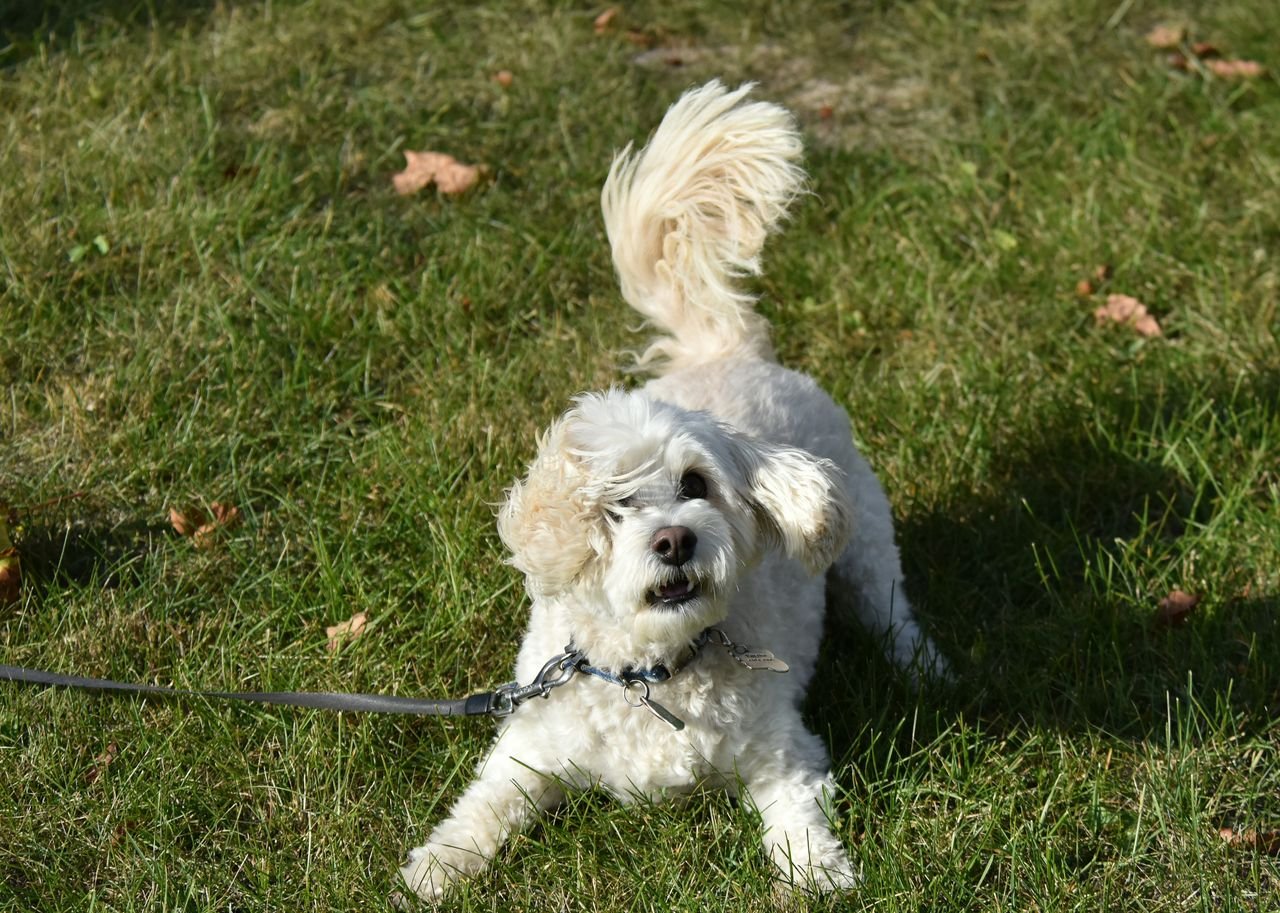
After a Central Valley summer, most Elk Grove pets have spent three months mostly indoors. When October finally cools, families pick up where they left off in May and go straight back to long walks. Muscles and paw pads are not ready for that, and sore, limping pets follow. Build back over about two weeks instead.
Why a Valley summer takes the edge off
Elk Grove spends June through September somewhere between the mid nineties and the low hundreds. Walks shrink to a short loop at dawn, or they stop altogether, and the ball in the backyard stays where it landed. That is the sensible choice in that kind of heat. The cost is that a dog who comfortably managed three miles of the Laguna Creek trail in spring has spent a whole season losing the muscle, tendon strength and stamina that made it comfortable.
The change is invisible because nothing about your dog looks different. Conditioning is not something you can see from across the room. It shows up on the first cool Saturday, when the whole family walks twice as far as anyone has walked since May, and it shows up again on Sunday morning when the dog will not come down the stairs.
The two week rebuild
Start at roughly half the distance your dog handled easily last spring, then add about ten percent each outing. That sounds slow. It is still faster than most dogs rebuild on their own, and it gets you back to full distance inside two weeks without a single sore morning.
Three things matter more than the total:
- Distance before speed. Long steady walks rebuild tendons and ligaments. Sprinting does not, and it is the part most likely to hurt something.
- Soft ground before asphalt. The lawns at Elk Grove Regional Park and the dirt margins of the creek trails are far kinder for the first week than a sidewalk loop around the block.
- Leave the ball thrower in the garage. Repeated sprint, stop and turn is the single hardest thing you can ask of an unconditioned dog, and it is how a lot of knee injuries start. Bring it back in week three.
If your dog is young, fit and was never really off duty this summer, you can move faster. If your dog is over about seven, carrying extra weight, or has ever been stiff after a big day, move slower than feels necessary.
Paw pads soften faster than you expect
Pads are skin, and skin that has spent a season on carpet, tile and cool grass goes soft. The first long walk on warm sidewalk can take the surface off them. You will not always see it happen, because most dogs keep walking cheerfully on pads that are already raw, and the limping starts once you are home.
Turn each front paw over after the first few walks and look at the surface of the pads. Healthy pads look matte and slightly rough. Pads that are shiny, pink, or worn smooth in patches have had enough for a few days. And remember that early October afternoons here still reach the nineties. The evening walk is genuinely cooler than the afternoon one, and the sidewalk holds its heat for hours after the air has cooled.
The weight that arrived quietly
A summer of short walks and unchanged meals puts weight on almost every pet in this city, and it is usually a pound or two rather than anything dramatic. The problem is timing. Extra weight loads joints hardest during exactly the two weeks you are asking those joints to do more than they have done since spring.
You do not need a scale to check. Run your hands along your pet’s sides. The ribs should sit just beneath a thin covering and be easy to count without pressing. If finding them takes real pressure, slow the rebuild down and make the food bowl slightly smaller. Our wellness program includes a body condition check and a realistic plan for taking it back off, which is easier in fall than at any other point in the year.
Cats lose condition too
Indoor cats are quietly affected by the same season. Air conditioning and long afternoons on the bed mean less climbing, less chasing and fewer of the short explosive sprints that keep a cat strong. When the house cools and a cat suddenly starts using the stairs and the cat tree again, the same soreness can follow.
Rebuild with more sessions rather than longer ones. Three or four short bursts of wand play across the day suit a cat far better than one long session. Watch older cats especially closely, because they hide stiffness well. A cat who has stopped jumping onto the counter, who takes the stairs one at a time, or who now sleeps downstairs when she always slept upstairs is telling you something about her joints, not about her preferences.
Normal soreness, and what is not
Some stiffness after a big day is ordinary. It looks like a slightly slow start that loosens up within ten or fifteen minutes of moving around, and it is gone the next day.
These are not ordinary, and they are worth a call:
- Limping that is worse the morning after than it was the night before
- A leg your pet will not put any weight on at all
- A sudden yelp during a run, followed by holding one back leg up
- Swelling around a joint, or heat in one leg compared with the other
- Any limp that has not cleared within twenty four hours
- A cat who stops jumping, or a dog who cannot manage stairs he managed last week
The sudden yelp during a sprint matters most. In an unconditioned, slightly overweight dog, that is a classic way for a knee ligament to give way, and it needs looking at rather than resting and hoping.
When to call us
We hold slots each day for dogs and cats who need to be seen quickly, and the final hour before we close stays free for urgent cases. If what you want is a routine appointment late in the day, call first and we will place you earlier. If your pet is limping badly, will not bear weight, or is in obvious pain, our urgent care service covers exactly this, with no emergency fee.
A limp that does not settle usually needs a look inside the joint rather than another week of rest, and our pet diagnostics service handles the imaging in house so you are not waiting on a referral to find out what is going on.
One thing worth knowing before you need it. We are open Monday to Friday until 7:00 PM and Saturday until 5:00 PM, and we are closed on Sunday. Sunday afternoon is when families take the long walk, so it is also when these injuries tend to happen. If your pet is badly hurt when we are closed, drive to the nearest open emergency veterinary hospital and phone them on the way rather than waiting for us to open.
Questions Elk Grove owners ask
How long before my dog is back to normal distance?
About two weeks for a healthy adult dog who was fit in spring. Longer for seniors, for dogs carrying extra weight, and for flat faced breeds, who also need the cooler part of the day regardless of the calendar.
My dog seems fine during the walk and stiff afterwards. Why?
Adrenaline and interest carry dogs well past the point where they should have stopped. Almost no dog self limits on a walk. That is the owner’s job, which is why the ramp matters more than how your dog looks at the time.
Is it too warm to walk in early October here?
In the afternoon it often still is. Put the back of your hand on the sidewalk and hold it there. If you would not keep it there comfortably, it is too warm for pads. Early morning and after sundown are reliably better through most of October.
Should I give my older dog something for the stiffness?
Speak to us before giving anything at all, including products sold for people. Several common human products are genuinely dangerous for dogs and cats. There are good options for sore older joints, and the right one depends on your pet’s kidneys, liver and weight, which is what the annual bloodwork is for.
My cat has started sleeping downstairs instead of on my bed. Is that just fall?
It can be, but it is also one of the most common early signs of joint pain in cats, because the jump onto the bed stopped being worth it. Mention it at her next visit. Cats rarely limp, so changes in where they choose to go are often the only clue you get.
Speak to the team at Stonelake Animal Hospital
If you want a body condition check before you increase the walks, or your pet has come up lame after a big day, phone us and we will find you a slot, or go to the nearest open emergency veterinary hospital if we are closed.
Published by the team at Stonelake Animal Hospital.
This article is for general educational purposes only and is not a substitute for an in-person veterinary examination or advice about your individual pet. If you have an urgent concern about your pet, contact Stonelake Animal Hospital or your nearest emergency veterinary hospital right away.
Stonelake Animal Hospital
2521 W Taron Ct, Suite 150, Elk Grove, CA 95757
Phone: (916) 714-3333
Hours: Monday to Friday 8:00 AM to 7:00 PM; Saturday 8:00 AM to 5:00 PM; Sunday closed