
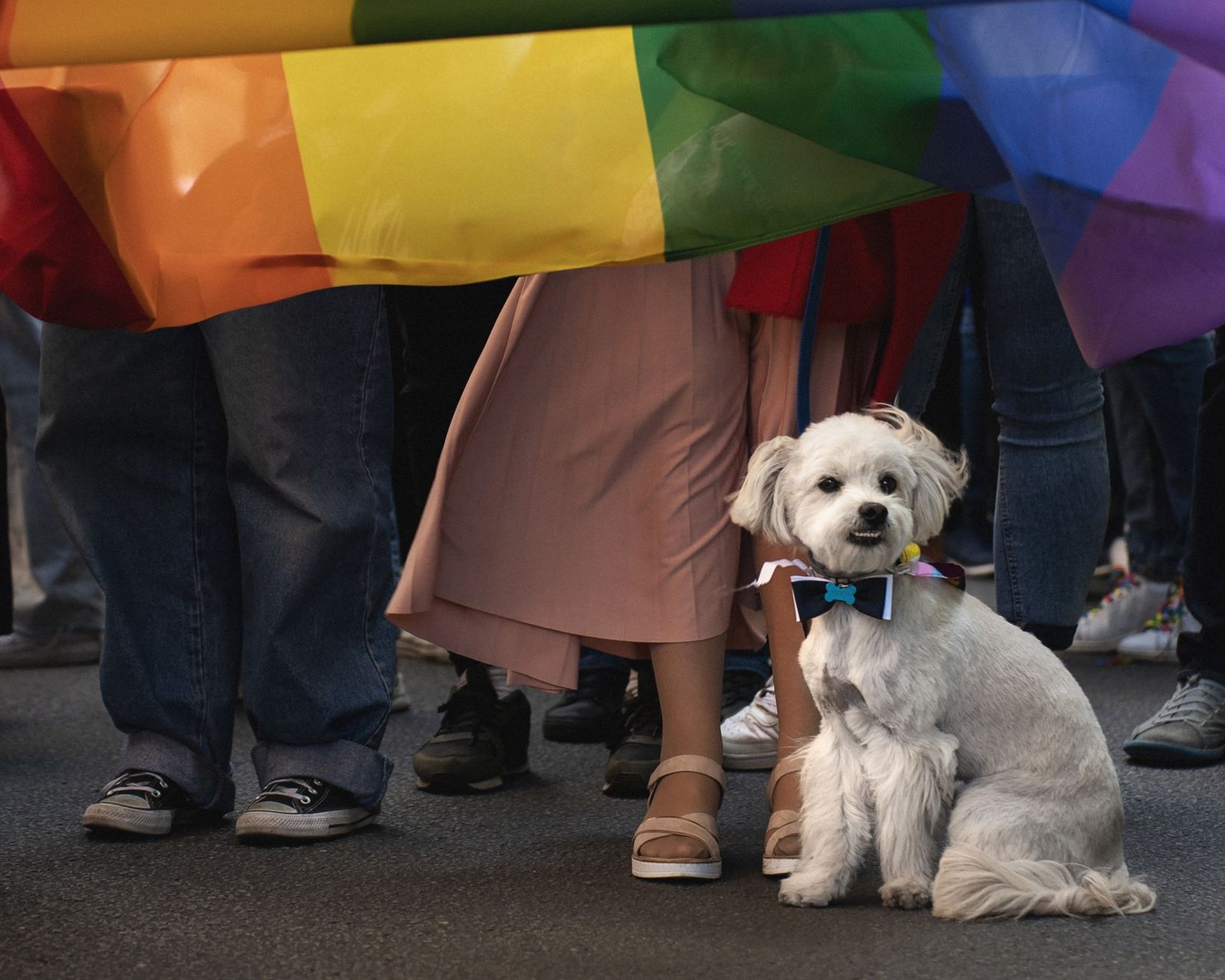
Holiday gatherings ask something of a dog that nothing else in the year asks: a house full of unfamiliar people, moving unpredictably, for hours, with food everywhere. Most dogs manage. The ones who do not usually gave plenty of warning the year before, in a language nobody in the room was reading.
The signals people miss
Owners watch for growling. Growling is late. By the time a dog growls they have usually been asking to be left alone for some time in quieter ways, and those earlier signals are the ones worth knowing because they are where you can still help.
- Lip licking when there is no food involved.
- Yawning at odd moments, when the dog is clearly not sleepy.
- Turning the head away from someone leaning in, or leaning away while being petted.
- The white of the eye showing as a crescent, usually because the dog is keeping their head still while watching something sideways.
- A tucked tail, lowered ears, or a body held tight and still.
- Panting when the house is not warm and the dog has not been running.
- Shaking off as though wet, which dogs often do to reset after something uncomfortable.
- Refusing food they would normally take. A dog too stressed to eat is well past mild.
- Leaving the room, or going to a bed, a crate or under a table. This is a dog solving the problem themselves, and it should be respected rather than followed.
The single most useful rule in this article: a dog who removes themselves has made a good decision. The worst outcomes happen when somebody follows them, reaches into the space they withdrew to, and the dog discovers that leaving did not work.
A safe room beats socializing
There is a well-meaning instinct to bring the nervous dog into the middle of things so they get used to it. For an already anxious dog, a crowded room is not practice; it is hours of being unable to escape. Exposure helps when a dog can choose their distance, and a full house removes exactly that.
So set up somewhere genuinely good before anyone arrives:
- A room with a door that closes, away from the front entrance and the kitchen.
- Their own bed and water, plus something that smells of the household.
- Background noise — a fan, music, a television — which covers the doorbell and the sudden laughter more effectively than silence.
- Something long-lasting to chew, given before the guests arrive rather than after the dog is already wound up.
- A sign on the door asking people not to open it. This sounds excessive and it is the thing that actually works, because the risk at a party is someone being kind.
- A good walk earlier in the day, and their normal meal before the guests come. A tired, fed dog settles far better than a hungry excited one.
Check on them yourself every so often rather than sending a guest.
What to ask of your guests
Say it once, at the start, to the whole room, and keep it simple. People follow clear instructions and ignore vague hints.
Ask them not to lean over the dog, hug them, or put their face near the dog’s face — all three read as confrontational even when they are affectionate. Ask them to let the dog come to them rather than approaching, and to stop petting after a few seconds so the dog can choose whether to stay. And ask them not to feed the dog anything, which covers both the stress and the richer problem of what is on the table.
With children, be more specific still, because the combination of children and dogs produces most of the injuries we see: nobody approaches the dog while they are eating, sleeping, chewing something, or in their bed or crate. Those four situations account for a great deal of it, and children cannot be expected to read the signals above.
One more thing worth saying plainly: a dog who has never bitten anyone is not a dog who cannot. Almost every bite we hear about came from a dog with no history, in a situation where the dog had run out of ways to ask for space.
When it is more than nerves
There is a line between a dog who finds a party tiring and a dog who is genuinely suffering, and it is worth knowing where it sits.
Come and talk to us if your dog pants and paces for hours rather than settling once things quieten, cannot be left alone at all, is destructive or soils the house when people visit, is getting worse year on year rather than habituating, or has shown teeth or snapped at anyone. Also come if the fear is new in an older dog, because anxiety that appears for the first time late in life is sometimes pain or a change in hearing or sight rather than a behavior problem at all.
Our medical services cover that assessment, and it genuinely starts with ruling out the physical, because a sore or deaf dog behaves like a frightened one. Where a workup is needed, in-house blood work is part of that picture. For dogs whose anxiety is severe, there is more we can offer than most owners realize, and it is a conversation worth having in November rather than on the day. A dog who has bitten, or who is in acute distress, should be seen through urgent care rather than waiting for a routine slot.
Our hours
We are open Monday through Friday from 8:00 am to 7:00 pm and Saturday from 8:00 am to 5:00 pm. We are closed on Sunday. The last hour of each day is held for urgent cases, so please call ahead if you need a routine appointment.
Anxiety is a booked conversation and it is better had before the season than during it. A bite wound on a person needs medical attention for the person first, and the dog assessed afterwards. If your pet is in acute distress, has injured themselves trying to escape, or has got out of the house when we are closed, go to an open 24-hour emergency hospital.
Common questions
Should I make my dog say hello so they get used to people?
No. Let the dog choose the distance. Forced greetings are where most of the trouble starts, and a dog who is allowed to approach on their own terms usually does.
My dog barks at the door and then is fine. Is that anxiety?
Often it is just arousal, and it settles. What matters is what happens after the first five minutes: a dog who comes down is managing, a dog who stays wound up for hours is not.
Is a crate cruel in this situation?
Not if the dog already likes it and the door is their choice rather than a lock they resent. A crate the dog uses voluntarily is one of the best tools here. A crate introduced the day of the party is not.
What about my cat?
Cats need the same thing and ask for it even more quietly. Give them a closed room upstairs with a litter box, food, water and somewhere high to hide, and tell guests that room is off limits.
Can anything help a dog who panics every year?
Yes, and more than most owners expect, combining changes to the setup with other support. Come and discuss it well before the first gathering so there is time to get it right.
Speak to the team at Stonelake Animal Hospital
Before your first gathering, pick the room, set it up, and decide what you will say to the first guest who reaches for the dog. If last year was hard, call us now rather than in late December.
Published by the team at Stonelake Animal Hospital.
This article is educational in nature and is not a replacement for hands-on assessment of your own pet by a veterinarian.
Stonelake Animal Hospital
2521 W Taron Court, Suite 150, Elk Grove, CA 95757
Phone: (916) 714-3333
Hours: Monday to Friday 8:00 am to 7:00 pm; Saturday 8:00 am to 5:00 pm; closed Sunday